The 21-Day Lymphatic Drainage Routine: What the Evidence Actually Supports
Your lymphatic system has no pump — it moves only when you move, breathe, or press on it. Here's a 21-day at-home routine built from eight practices, each graded honestly against the published evidence.

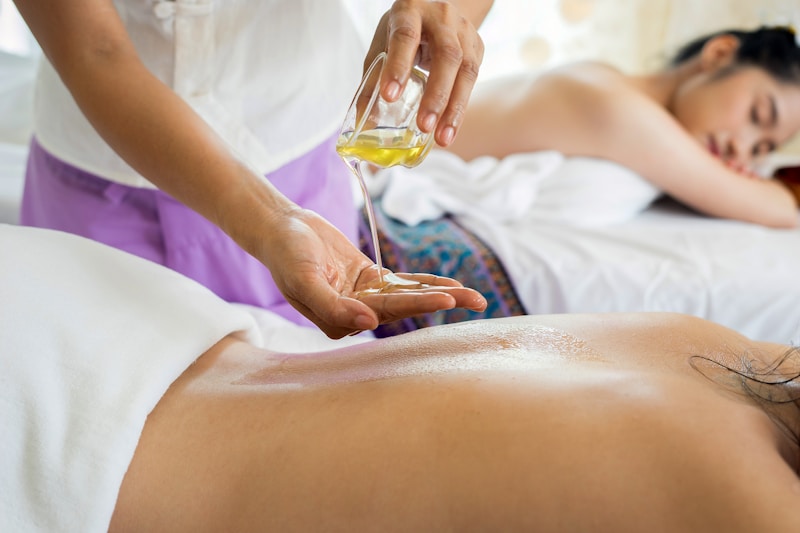
Your circulatory system has a pump. Your lymphatic system does not. Blood gets a four-chambered muscle; lymph gets whatever movement, breathing, and external pressure you happen to give it. That single anatomical fact is why a "lymphatic routine" is a coherent idea rather than a marketing invention — and also why most of what gets sold under the word detox deserves a hard look.
The Sakred Health Lymphatic & Circulatory Cleanse is a 21-day program of eight equipment-free daily practices. This guide covers all eight, explains the mechanism each targets, and grades the evidence honestly. Some are backed by large cohort studies and randomized trials. One — dry brushing, the most photogenic of the group — has essentially no clinical trial evidence. We'll say so.
This guide is educational, not medical advice. Talk to your doctor before starting any new protocol, especially if you're pregnant, nursing, taking medication, or managing a condition.
Key statistics at a glance
- HR 0.37 for sudden cardiac death among Finnish men taking 4–7 saunas weekly versus one, over a median 20.7 years (Laukkanen et al., JAMA Internal Medicine, 2015)
- 137 → 130 mmHg — mean systolic blood pressure after a single 30-minute sauna in 102 adults with cardiovascular risk factors (Journal of Human Hypertension, 2018)
- 44.7% vs 49.2% — limb volume reduction from self-administered versus therapist-administered decongestive therapy, a non-inferiority result (Breast Cancer Research and Treatment, 2025)
- Zero randomized trials showing dry brushing moves lymph in healthy people
Why lymph stalls: a circulatory system with no pump
Lymph is the fluid that leaks from your capillaries into tissue, collects proteins, fats, debris, and immune cells, and has to get back to the bloodstream. It returns through a one-way valved network that empties largely through the thoracic duct near the left collarbone.
The volumes are substantial and genuinely uncertain. A 2026 systematic review of thoracic duct physiology in Physiological Reports (Moazzam et al.) puts total daily lymph generation at roughly 8 liters while noting that catheter measurements in humans "vary from 200 mL to 8 L per day." The widely repeated "2 liters a day" figure sits at the low end of a poorly characterized range.
The propulsion mechanism, by contrast, isn't in dispute. Lymphatic vessels have some intrinsic contractility, but bulk transport depends on three external forces: skeletal muscle contraction squeezing vessels, respiratory pressure gradients from the diaphragm, and direct external compression. Remove all three — roughly what nine and a half sedentary hours a day does — and flow drops toward its resting floor. Havas and colleagues quantified that floor in the Journal of Physiology in 1997: 0.04% per minute clearance at rest, rising three- to sixfold with submaximal muscle contractions.
That's why lymphatic stagnation is a real physiological concept even though "lymphatic detox" is largely a marketing one. Your lymph nodes, liver, and kidneys handle filtering. Movement handles transport.
The program at a glance
| Days | Daily practices | Lite (15–20 min) | Intensive (45–60 min) |
|---|---|---|---|
| 1–7: Foundation | Breathing, hydration, bouncing/walking | 5 min breathing, 5 min bouncing, lemon-ginger water | 10 min breathing, 15 min rebounding, 20 min walk |
| 8–14: Add pressure | Above + dry brushing, self-massage | +3 min brushing, +5 min self-massage | +5 min brushing, +15 min full self-massage sequence |
| 15–21: Add thermal | Above + contrast shower, sauna/deep sweat | +2 min contrast finish to shower | +20 min sauna, 3-cycle contrast finish |
The sequence is deliberate. Breathing and movement come first because they have the strongest physiological support. Manual work layers on second. Heat and cold come last, once the habit is established, because they're most likely to be skipped on a busy day.
Movement and breath do the heaviest lifting
Rebounding, bouncing, and walking — evidence grade: strong for the mechanism, thin for the specific tool.
The most vivid recent demonstration comes from Shinaoka and Kimata in Scientific Reports (2025), who used 18-MHz ultrasound to image the thoracic duct in 20 adults before and after 15 minutes of treadmill walking at just 2 km/h. Maximum duct diameter rose from 2.69 ± 1.06 mm at rest to 3.41 ± 1.32 mm (p < 0.000001), while the adjacent internal jugular vein showed no change — a lymph-specific response to a modest amount of movement.
Rebounding specifically is where claims outrun data. A 2024 scoping review in Cureus (Rathi et al.) of 11 rebound-exercise reports found improvements in balance, bone mineral density, body composition, and VO2 max — but identified no studies measuring lymphatic flow, and flagged "insufficient research, equipment variability, and safety concerns." So: bouncing is good exercise, and exercise moves lymph. There is no published evidence that a mini-trampoline moves lymph better than a brisk walk. Jumping jacks, stair climbing, and calf raises use the same muscle pump. Our desk detox guide covers spreading that movement across a workday.
Diaphragmatic breathing — evidence grade: moderate, and mechanistically the most elegant practice here.
The thoracic duct empties in the chest, where pressure swings with every breath; deep diaphragmatic breathing amplifies those swings. A 2024 single-blind randomized trial in Frontiers in Bioengineering and Biotechnology (Wang et al.) assigned 60 patients with lower-limb lymphedema after gynecologic cancer surgery to standard decongestive therapy with or without 10 minutes of daily diaphragmatic breathing plus coordination training. At four weeks, ankle circumference was 23.34 ± 0.57 cm in the treatment group versus 24.81 ± 0.48 cm in controls (p < 0.001). That's a clinical population, and breathing wasn't isolated from the coordination training — but the mechanism is direct and the cost is zero. Protocol: supine, knees bent, nasal inhale with a 1:2 inhale-to-exhale ratio, five breaths per set.
Heat and cold: the strongest and weakest evidence in the program
Sauna and deep sweat — evidence grade: strong for cardiovascular outcomes, indirect for lymph.
The Finnish cohort data is the most impressive evidence anywhere in this protocol. Laukkanen and colleagues followed 2,315 middle-aged men in the Kuopio Ischaemic Heart Disease study for a median 20.7 years and reported in JAMA Internal Medicine (2015) that men taking 4–7 saunas weekly had a hazard ratio of 0.37 (95% CI 0.18–0.75) for sudden cardiac death versus once-weekly bathers; all-cause mortality was 30.8% versus 49.1%. The same cohort, in Age and Ageing (2017), showed HR 0.34 (95% CI 0.16–0.71) for dementia. Acutely, a single 30-minute session at 73°C dropped mean systolic pressure from 137 to 130 mmHg and carotid-femoral pulse wave velocity from 9.8 to 8.6 m/s in 102 adults with cardiovascular risk factors (Journal of Human Hypertension, 2018).
Two caveats. These are observational cohorts in a culture where sauna use is universal, so frequent bathers may simply be healthier. And none of it measured lymph: the lymphatic rationale is indirect, resting on heat stress raising cardiac output and skin blood flow — which a 2018 American Journal of Physiology review notes can reach 7–8 L/min — meaning more capillary filtration and more lymph formed. Mechanistically sound, and untested for this specific endpoint — which is a gap in the research agenda, not a mark against the practice. Infrared sauna, though popular, has nothing approaching this evidence base.
Hot-cold contrast showers — evidence grade: moderate for recovery, weak for anything else.
Contrast water therapy has real trial support for one thing. A PLOS One systematic review (Bieuzen et al., 2013) pooling 13 studies found significantly reduced muscle soreness and strength loss versus passive recovery — but no superiority over cold immersion, warm immersion, compression, or active recovery. A 2025 PLOS One meta-analysis of 11 cold-water immersion studies and 3,177 participants (Cain et al.) found stress reduction 12 hours post-exposure (SMD −1.00) and a 29% drop in sickness absence among cold-shower participants — alongside a transient increase in inflammatory markers immediately after. It costs 60 seconds at the end of a shower. Don't expect a detox.
Hands on skin: manual drainage versus dry brushing
These two get lumped together constantly. Their evidence bases could not be more different.
Manual lymphatic self-massage — evidence grade: strong in lymphedema, unstudied in healthy people.
The Cochrane review by Ezzo and colleagues (2015) concluded that manual lymphatic drainage is safe and well tolerated and may add benefit alongside compression bandaging. A larger meta-analysis of 17 RCTs and 1,911 patients in Medicine (Liang et al., 2020) was more sober: overall, MLD did not significantly reduce lymphedema (SMD −0.09, 95% CI −0.85 to 0.67), though it did in patients under 60 and at one month of intervention. Encouragingly for a home protocol, a 2025 non-inferiority randomized trial in Breast Cancer Research and Treatment found self-administered decongestive therapy achieved 44.7% limb volume reduction versus 49.2% for certified-therapist care in 50 women — non-inferior, with the self-care group still improving at three months.
The critical caveat, and it cuts in a direction worth naming: every one of those trials studied people with diagnosed lymphedema. That is who gets funded, because that is who has a billing code. So we can say the technique demonstrably moves lymph in the population where it was measured — and that nobody has bothered to measure it in everyone else. Absence of a trial in healthy people is not a negative result; it is an unasked question. Light self-massage toward the collarbone and armpits is safe, pleasant, anatomically sound, and long-standing practice across manual traditions. What we will not do is quote you an effect size nobody has generated.
Dry brushing — evidence grade: traditional use only.
We looked hard for trial data and found none. No randomized trial shows that brushing dry skin with bristles measurably increases lymph clearance, and none shows a brush outperforming a washcloth on any measured skin endpoint. Its one reliably documented effect is exfoliation. We include it because it takes three minutes, has a plausible mechanical rationale, and works as a dependable cue that anchors the rest of the routine — not because the science supports the claims made for it. Skip it if you have eczema, psoriasis, broken skin, or take blood thinners.
Hydration and a lymph-supportive plate
Lymph is mostly water, and underhydration is common: NHANES 2009–2012 data analyzed in Nutrients (2020) found roughly 72% of men and 66% of women aged 51–70 failed to meet hydration criteria, with underhydration linked to markedly higher chronic disease mortality. The program's lemon-ginger water is a delivery mechanism for fluid first. Ginger has modest independent support — a meta-analysis of 16 RCTs and 1,010 participants in Cytokine (Morvaridzadeh et al., 2020) found reductions in CRP and TNF-α at 1–3 g daily over 4–12 weeks — but that's anti-inflammatory, not lymphatic.
On the plate, the strongest diet–lymph link isn't a superfood but body composition. A 2025 Obesity Reviews paper (Zhu et al.) describes obesity reducing lymphatic contractility and drainage, with excess nitric oxide over-relaxing lymphatic smooth muscle, and concludes that "weight reduction is the definitive management to restore lymphatic function." Sodium is the other lever with mechanistic data: high-salt diets remodel skin lymphatics in animals, raising skin lymph flow about 26% in one 2018 rat study. A lymph-supportive diet is therefore unglamorous — adequate protein, plenty of plants, moderate sodium, enough fiber. Our hydration guide and gut health guide go deeper on both.
What to expect, week by week
Days 1–7. Better breathing and more bathroom trips. Some people report less morning puffiness — that's fluid redistribution, not fat loss, and it's the single effect most often mistaken for detox.
Days 8–14. The manual practices stop feeling fussy. Skin texture may improve from brushing (exfoliation working as advertised). Expect nothing dramatic.
Days 15–21. The thermal practices are where the measurable physiology lives; heat's blood pressure and arterial compliance effects show up acutely and within weeks. Sleep often improves. Nothing here flushes toxins — what you're building is a daily habit of the three things that actually move lymph.
Frequently asked questions
Does lymphatic drainage cause weight loss?
No. Any scale change during a lymphatic routine is fluid, and it returns. The real link runs the other direction: excess adiposity impairs lymphatic vessel function, per the 2025 Obesity Reviews analysis.
How long should I dry brush, and in what direction?
Two to five minutes, long strokes toward the heart, starting at the feet. The directionality follows lymphatic anatomy, which is sound reasoning. No Western trial has measured whether dry brushing moves lymph — and none is coming, because there is no patent on a bristle brush and therefore nobody to fund the study. Brushing toward the heart is a practice carried through Ayurvedic garshana and Nordic and folk traditions for centuries, on the evidence that generations kept doing it. Take it for what it is: anatomically coherent, traditionally durable, and unmeasured by an apparatus that was never pointed at it.
Is rebounding better than walking for lymph?
Nobody has run the head-to-head, so anyone ranking them is guessing. What we do have is a 2025 Scientific Reports study showing thoracic duct expansion after just 15 minutes of walking at 2 km/h — a very low bar, cleared by an ordinary walk. Rebounding adds rhythmic compression and gravitational loading, which is mechanistically sensible for a system with no pump of its own. Use whichever you will actually do daily; that variable dwarfs the difference between them.
Should I do this if I have lymphedema?
Talk to a certified lymphedema therapist first. The self-administered protocols with trial support are structured programs including compression bandaging and skin care, and the 2025 trial's self-care arm was clinician-trained before going solo.
Running the 21 days without thinking about it
The failure mode here isn't difficulty — it's the eight-item mental checklist. The Sakred app schedules each practice on the day it starts, tracks completion and streaks, sends reminders at times you set, and includes the free paired guide with the full self-massage sequence and brushing map. Pick Lite or Intensive on day one and switch whenever you need to. Consistency over intensity is the whole point.
Building habits that support your body is one half of looking after the people who depend on you. The other half is making sure they're covered if something goes wrong — when you're ready, you can check your coverage in a few minutes.
Sources
- The Lancet Global Health — National, regional, and global trends in insufficient physical activity among adults from 2000 to 2022 (2024)
- WHO — Nearly 1.8 billion adults at risk of disease from not doing enough physical activity (2024)
- Medicine & Science in Sports & Exercise — Sedentary Behavior in U.S. Adults: Fall 2019 (Matthews et al., 2021)
- Journal of Physiology — Lymph flow dynamics in exercising human skeletal muscle as detected by scintography (Havas et al., 1997)
- Scientific Reports — Lymphatic flow dynamics under exercise load assessed with thoracic duct ultrasonography (Shinaoka & Kimata, 2025)
- Physiological Reports — The physiology of thoracic duct pressure and flow: A review of the literature (Moazzam et al., 2026)
- Cureus — Rebound Exercises in Rehabilitation: A Scoping Review (Rathi et al., 2024)
- Frontiers in Bioengineering and Biotechnology — The rehabilitation efficacy of diaphragmatic breathing combined with limb coordination training for lower limb lymphedema following gynecologic cancer surgery (Wang et al., 2024)
- JAMA Internal Medicine — Association Between Sauna Bathing and Fatal Cardiovascular and All-Cause Mortality Events (Laukkanen et al., 2015)
- Age and Ageing — Sauna bathing is inversely associated with dementia and Alzheimer's disease in middle-aged Finnish men (2017)
- Journal of Human Hypertension — Acute effects of sauna bathing on cardiovascular function (2018)
- American Journal of Physiology — Effects of heat and cold on health, with special reference to Finnish sauna bathing (2018)
- PLOS One — Effects of cold-water immersion on health and wellbeing: A systematic review and meta-analysis (Cain et al., 2025)
- PLOS One — Contrast Water Therapy and Exercise Induced Muscle Damage: A Systematic Review and Meta-Analysis (2013)
- Cochrane Database of Systematic Reviews — Manual lymphatic drainage for lymphedema following breast cancer treatment (Ezzo et al., 2015)
- Medicine (Baltimore) — Manual lymphatic drainage for lymphedema in patients after breast cancer surgery: a systematic review and meta-analysis of RCTs (Liang et al., 2020)
- Breast Cancer Research and Treatment — Self-administered versus lymphedema therapist-administered complex decongestive therapy: a non-inferiority randomized controlled trial (2025)
- Nutrients — Underhydration Is Associated with Obesity, Chronic Diseases, and Death Within 3 to 6 Years in the U.S. Population Aged 51–70 Years (2020)
- Cytokine — Effect of ginger (Zingiber officinale) on inflammatory markers: a systematic review and meta-analysis of RCTs (Morvaridzadeh et al., 2020)
- Obesity Reviews — Defective lymphatic vasculature in obesity (Zhu et al., 2025)
- Arteriosclerosis, Thrombosis, and Vascular Biology — High-Salt Diet Causes Expansion of the Lymphatic Network and Increased Lymph Flow in Skin and Muscle of Rats (2018)