Inflammatory Foods and What to Eat Instead: A Swap-by-Swap Guide to the Evidence
Ultra-processed foods now supply 53% of American adult calories. This guide separates what the trials actually measured about diet and inflammation from what they get reported as saying, with twelve concrete swaps, a hard look at what the seed oil research never asked, and a plain answer on the alkaline framing.

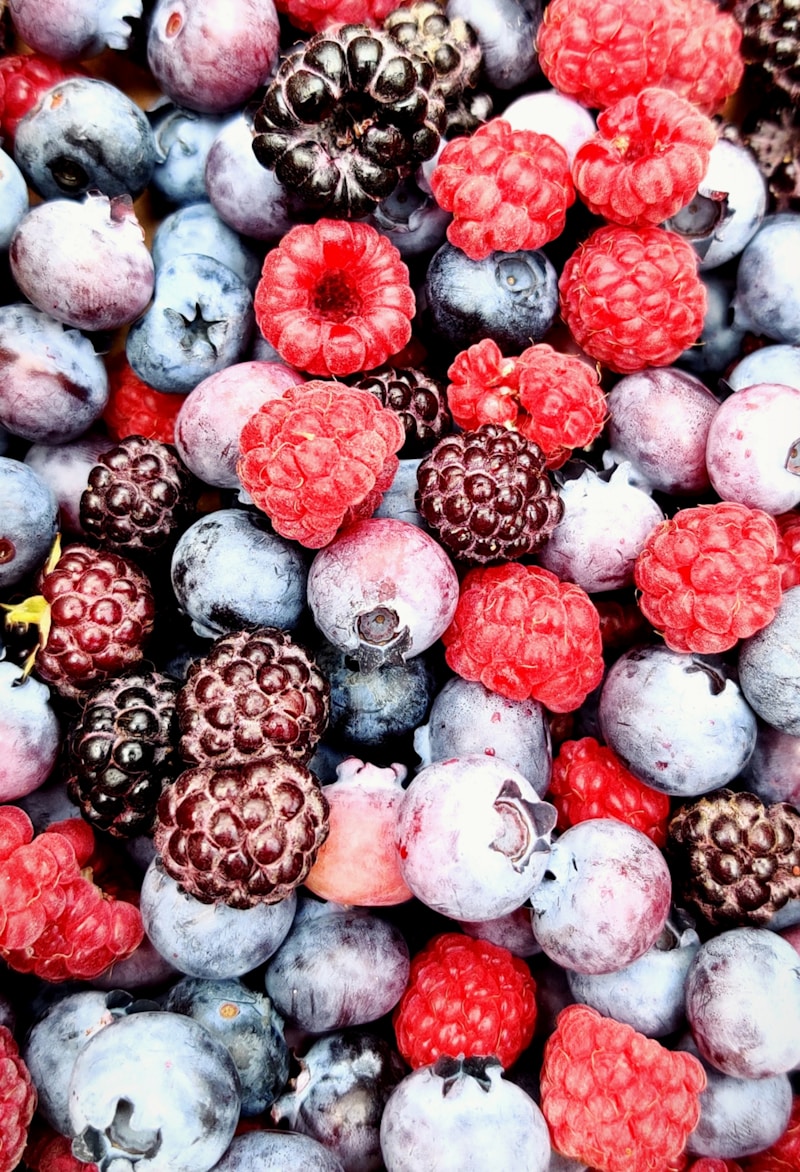
In August 2021 through August 2023, adults in the United States got 53.0% of their calories from ultra-processed foods, according to NCHS Data Brief 536, published by the CDC's National Center for Health Statistics in August 2025. That is the food environment most people are actually eating in — and it is the reason "what's inflammatory?" has become one of the most-searched health questions in America.
The honest answer is more interesting than the internet version. Inflammation is not a villain; it is a repair system. What matters is whether that system runs briefly and then stands down, or hums quietly in the background for decades. And while diet clearly moves the needle, it moves it modestly, through patterns more than through individual villain foods. This guide is what the trials actually show, what to swap, and where the popular claims outrun the evidence.
This guide is educational, not medical advice. Talk to your doctor before starting any new protocol, especially if you're pregnant, nursing, taking medication, or managing a condition.
Key statistics at a glance
- A 500-calorie-per-day difference appeared when 20 adults ate ultra-processed versus unprocessed diets matched for presented calories, sugar, fat, sodium, fiber, and macronutrients — Hall and colleagues, Cell Metabolism, 2019
- Every 50 g of processed meat eaten daily is associated with about 18% higher colorectal cancer risk — IARC Monographs Volume 114, 2018
- hs-CRP rose 60–109% in healthy young men drinking just 600 mL of sugar-sweetened beverage daily for three weeks — Aeberli and colleagues, American Journal of Clinical Nutrition, 2011
- 19 inflammatory proteins fell, including interleukin-6, in adults who ate a fermented-food diet for 10 weeks — Wastyk and colleagues, Cell, 2021
- Mean US fiber intake is about 16 g/day against Adequate Intakes of 25 g for women and 38 g for men — USDA Food Surveys Research Group, 2014; Institute of Medicine
- 17.1 teaspoons of added sugar per day is the US adult average, against a Dietary Guidelines ceiling of 10% of calories — roughly 12 teaspoons at 2,000 kcal — USDA Economic Research Service
- Higher blood levels of linoleic acid — the main omega-6 in seed oils — were associated with lower cardiovascular mortality (HR 0.78) across 30 cohorts and 68,659 people. This measured blood, not bottles, and no trial in this literature tested the refining chain that turns a seed into commodity oil — Marklund and colleagues, Circulation, 2019
Acute inflammation is protection. The chronic kind is the problem.
Cut your finger and the tissue goes red, warm, and swollen within minutes. Blood vessels dilate, neutrophils arrive, pathogens get cleared, repair begins, and the whole program shuts off in days. That is acute inflammation, and it is one of the best things your body does. Suppressing it wholesale would be a disaster.
Chronic low-grade inflammation is a different animal. In a 2019 review in Nature Medicine, Furman and colleagues described what they called systemic chronic inflammation: a persistent, low-amplitude activation of immune signaling with no clear resolution point, driven by ordinary modern inputs — physical inactivity, poor diet, disrupted sleep, psychological stress, environmental exposures. They tied this state to cardiovascular disease, cancer, type 2 diabetes, chronic kidney disease, non-alcoholic fatty liver disease, and autoimmune and neurodegenerative disorders. It is not a disease itself. It is a shared upstream mechanism sitting under a lot of separate diagnoses — which is exactly why it belongs in a conversation about your internal environment rather than any one symptom.
The strongest evidence that this state is causal, not just correlated, does not come from food at all. It comes from a drug trial. In CANTOS, published in the New England Journal of Medicine in 2017, Ridker and colleagues randomized 10,061 patients who had already had a heart attack and whose hs-CRP was at least 2 mg/L to canakinumab — a monoclonal antibody against interleukin-1β — or placebo. The 150 mg dose cut recurrent cardiovascular events by 15%, with hs-CRP reductions of 26% to 41% depending on dose, and no lipid lowering at all. Blocking an inflammatory signal, without touching cholesterol, changed hard outcomes. That is the proof of principle.
What the evidence actually supports about food
Three markers dominate this literature: C-reactive protein (usually measured as high-sensitivity CRP), interleukin-6 (IL-6, which drives CRP production in the liver), and TNF-alpha. The American Heart Association and CDC categorize hs-CRP below 1 mg/L as low cardiovascular risk, 1–3 mg/L as average, and above 3 mg/L as high.
Here is where most articles stop being careful, so let's be careful.
Almost all diet trials measure biomarkers, not disease. They tell you a diet moved CRP by a fraction of a milligram per liter over 8 to 12 weeks. They do not tell you it prevented a heart attack.
CRP itself may be a messenger rather than a cause. Mendelian randomization studies — which use inherited genetic variants as natural randomization — have repeatedly failed to find a causal effect of lifelong higher CRP on myocardial infarction, coronary artery disease, heart failure, or atherosclerosis, including a 2023 two-sample bidirectional analysis in the International Journal of Molecular Sciences. CRP is a good thermometer. It is probably not the fire.
Effect sizes are modest, and dietary patterns outperform individual foods. A 2024 umbrella review in the British Journal of Nutrition by Tran and colleagues pooled 30 meta-analyses covering seven dietary patterns. The Mediterranean pattern produced the largest CRP reduction in randomized trials at −0.71 mg/L, followed by vegetarian and vegan patterns at −0.55 mg/L. Intermittent fasting, ketogenic, Nordic, and Paleolithic patterns showed no inverse association with CRP at all. And the authors were blunt about certainty: none of the associations reached "strong," "highly suggestive," or even "suggestive" evidence grades. Everything landed at weak.
A separate 2018 meta-analysis in Clinical Nutrition by Soltani and colleagues found the DASH diet lowered hs-CRP by 1.01 mg/L across six randomized trials and 451 participants — but only when compared with a usual diet. Against other healthy diets, the difference vanished. That is an important detail: much of what looks like an "anti-inflammatory diet effect" is really the effect of leaving the standard American diet.
| DASH vs. usual diet | 1.01 mg/L |
| Mediterranean | 0.71 mg/L |
| Vegetarian or vegan | 0.55 mg/L |
| Added fiber, +8 g/day | 0.37 mg/L |
| Energy restriction (not significant) | 0.09 mg/L |
Observationally, the picture is more consistent than the trials. The Dietary Inflammatory Index scores a diet's inflammatory potential from its components. An updated systematic review and meta-analysis published in 2025, pooling 30 cohort studies from nine countries and 669,205 participants, found that people in the most pro-inflammatory DII category had a 23% higher incidence of cardiovascular disease (HR 1.23, 95% CI 1.14–1.33) and 29% higher cardiovascular mortality (HR 1.29, 95% CI 1.24–1.35) than those in the least. Cohort studies cannot prove causation, but a signal that survives 669,205 people is worth acting on.
So: real, consistent, and modest. Not a cure. A dial.
Twelve swaps that change the inputs
This is the part that actually moves. Each swap below is a displacement — you are not adding a supplement, you are changing what occupies a slot you were going to fill anyway. Our free Anti-Inflammatory Food Chart rates 197 everyday foods on a seven-point scale from Strongly Anti-Inflammatory to Highly Inflammatory across six categories, and it is the fastest way to check any item not listed here.
| Instead of this | Eat or drink this | Why, specifically |
|---|---|---|
| Regular soda, sweet tea, sports drink | Sparkling water with citrus; unsweetened iced tea | In a 2011 randomized crossover trial (AJCN), 600 mL/day of sugar-sweetened beverage for three weeks raised hs-CRP 60–109% and fasting glucose 4–9% in healthy young men. US adults average 145 kcal/day from these drinks. |
| Fruit-flavored "juice drink" | Whole fruit, or 100% juice in a small glass | A 2022 meta-analysis of 64 controlled feeding trials (Nutrients) found food source determines the effect: fruit and 100% fruit juice lowered CRP; sugar-sweetened sources raised it. |
| Sweetened flavored yogurt (15–20 g added sugar) | Plain yogurt or kefir plus berries | A 2021 Stanford trial in Cell found a 10-week fermented-food diet increased microbiome diversity and reduced 19 inflammatory proteins including IL-6. You keep the ferment and drop the sugar load. |
| Bacon, hot dogs, deli meat most days | Roasted chicken thigh, canned sardines, lentils, eggs | IARC classified processed meat as Group 1 carcinogenic to humans for colorectal cancer; every 50 g/day is associated with ~18% higher risk. See the note below on what Group 1 does and doesn't mean. |
| Refined breakfast cereal | Steel-cut or rolled oats with walnuts and berries | A 2018 meta-analysis of 9 randomized trials (Medicine) found whole-grain diets significantly reduced CRP and IL-6, with the largest effects above 100 g/day of whole grains. |
| White sandwich bread | 100% whole-grain bread or whole-rye sourdough | Same whole-grain evidence, plus fiber. A 2015 meta-analysis of 14 RCTs found CRP fell 0.37 mg/L — but only when fiber intake differed by at least 8 g/day between groups. Small changes don't register. |
| Stick margarine and shortening spreads | Extra-virgin olive oil, or olive oil blended with butter | Less about trans fat than it used to be — the FDA revoked GRAS status for partially hydrogenated oils in 2015, with most uses ending June 2018. The positive case is PREDIMED: a Mediterranean diet with extra-virgin olive oil cut major cardiovascular events roughly 30% over 4.8 years. |
| Bottled sweetened salad dressing | Olive oil with lemon or vinegar, whisked at the table | Keeps the olive oil and removes 4–8 g of added sugar per serving. The Mediterranean pattern posted the largest CRP reduction of any pattern in the 2024 British Journal of Nutrition umbrella review. |
| Fried snack chips and crackers | Dry-roasted nuts, olives, air-popped popcorn, edamame | The mechanism here is the food matrix and calorie density, not the frying oil. In the 2019 Cell Metabolism inpatient trial, people ate ~500 kcal/day more on ultra-processed food matched for macros. |
| Flavored coffee drinks and energy drinks | Coffee or tea with cinnamon; add milk, not syrup | US adults average 17.1 teaspoons of added sugar a day against a roughly 12-teaspoon ceiling at 2,000 kcal. One large flavored latte can be a third of that ceiling. |
| Processed cheese slices and spreads | A smaller portion of aged cheese; hummus; guacamole | A displacement play: ultra-processed food exposure was linked to higher all-cause and cardiovascular mortality in a 2024 BMJ umbrella review of 45 pooled meta-analyses covering nearly 10 million people. |
| The 3 p.m. candy or pastry | Apple with almonds, or plain Greek yogurt | Same glucose-and-CRP mechanism as the beverage swap, applied to the slot where most people's willpower story actually plays out. Cravings are signals, not flaws. |
A note on the processed-meat classification, because it is routinely misreported. IARC Group 1 means the evidence that something causes cancer is strong — not that the risk is large. The WHO says so explicitly: processed meat sits in the same evidence category as tobacco smoking and asbestos, but "this does NOT mean that they are all equally dangerous." An 18% relative increase on a modest baseline risk is a real reason to make bacon a weekend food rather than a daily one. It is not a reason to panic.
Seed oils: what the trials measured, and what they never asked
This is the claim our readers hear most, and it is worth being precise about — because the popular version of it and the popular rebuttal are both answering the wrong question.
The mechanism argument goes: modern diets are flooded with omega-6 linoleic acid from soybean, corn, canola, and sunflower oil; linoleic acid converts to arachidonic acid; arachidonic acid is the precursor to pro-inflammatory eicosanoids; therefore seed oils drive chronic inflammation. Every step in that chain is biochemically real.
Researchers tested that chain, and here is what they found. A 2012 systematic review of randomized controlled trials in the Journal of the Academy of Nutrition and Dietetics by Johnson and Fritsche concluded that virtually no evidence from randomized intervention studies in healthy non-infant humans shows that adding linoleic acid to the diet raises inflammatory markers. A 2017 meta-analysis in Food & Function pooling 30 randomized controlled studies and 1,377 participants found no significant effect of higher linoleic acid intake on IL-6, and no significant effect on CRP overall. In a 2019 individual-level pooled analysis of 30 prospective cohorts in Circulation, Marklund and colleagues examined 68,659 participants and found higher linoleic acid associated with lower cardiovascular risk — hazard ratios of 0.93 for total cardiovascular disease and 0.78 for cardiovascular mortality.
Those findings get reported as "science says seed oils are fine." That is not what any of them established, and the gap matters.
Read the question they actually asked. Translated out of journal language, the trials asked: does raising one fatty acid, over a few weeks, in participants eating a controlled diet, move one or two blood proteins? The answer is no. That is a real answer to a small question. Nobody arrives at "is industrially extracted seed oil a sound thing to build a diet on?" from there — and CRP and IL-6 are surrogate markers, not health outcomes. As noted earlier in this guide, Mendelian randomization has repeatedly failed to show that CRP causes heart disease. A marker that may not cause the disease also cannot exonerate a food when it fails to move.
The Marklund analysis measured blood, not bottles. It used circulating and tissue fatty acid levels — a genuine strength against food-questionnaire error, and the reason it gets cited so confidently. But blood linoleic acid is not a record of how much refined oil someone poured into a pan. It tracks whole dietary patterns, including nuts, seeds, and whole foods that carry linoleic acid inside an intact food matrix. Reading a cohort of blood levels as a verdict on commodity oil is a substitution the study never made.
Nobody tested the processing. This is the part that goes missing entirely, and it is the part we care about most. Consider what each oil requires to exist:
- Olive oil. Crush the fruit. Press it. That is extra-virgin olive oil — a fruit juice, mechanically separated.
- Coconut oil. Press the meat. Separate.
- Butter. Agitate cream until the fat globules cluster. You can do it in a jar by shaking it.
- Canola, soybean, corn, cottonseed oil. Crack the seed, flake it, heat it, press it, wash the meal in hexane — a petroleum solvent — evaporate the solvent, degum, neutralize with alkali, bleach with clay, then deodorize by steam-stripping at roughly 200°C to strip the smell and taste that the previous steps produced.
A trial can match two oils for calories and fatty acid profile. It cannot match them for that. And no trial in this literature was designed to isolate the effect of the refining chain, so no trial in this literature has anything to say about it.
"Seed oil" is a category, not a substance. A study specifies its oil — a defined batch, stored to protocol, fresh. The category on a supermarket shelf has none of that. Polyunsaturated fats are the most oxidation-prone fats there are, a direct consequence of having more double bonds, and how oxidized a given bottle is depends on refining heat, light exposure, shelf time, and how long it sat in a warm truck. Fryer oil held hot for days is chemically not the oil that was poured in. "Vegetable oil" is often a blend whose composition shifts with commodity prices. None of that appears on the label, which means the trials tested something the shopper cannot buy, and the shopper buys something the trials never tested.
One fair caveat in the other direction. We cannot assert that the bottle at the store is worse than the bottle in the trial, because nobody has properly checked. What we can say is that "nobody has tested what people actually buy" is not the same sentence as "what people actually buy is fine." Refining has also become more industrialized as volume has grown; we have not found data quantifying how the average retail bottle has changed over time, so we flag it as an open question rather than a claim.
Where we land. We are not going to tell you canola causes inflammation, because the trials looked for that and did not find it, and we are not in the business of repeating a claim the evidence does not carry. We are also not going to pretend a hexane-washed, bleached, 200°C-deodorized industrial product earned a clean bill of health from a study that measured a blood protein for six weeks. Those are different statements and both are true.
Our position does not depend on the inflammation argument at all. Cook with extra-virgin olive oil and unrefined coconut oil because they are foods you could make in a kitchen, made from a plant you could hold, with nothing added and nothing stripped out. That has always been the standard here, and it does not need a biomarker to justify it.
Two genuine footnotes: conjugated linoleic acid, a different compound sold as a supplement, is not the same thing — a 2023 GRADE-assessed meta-analysis in Frontiers in Immunology found CLA supplementation raised CRP and TNF-alpha. And the case against fried snack foods never rested on the seed-oil story anyway: they are ultra-processed, calorie-dense, and displace better food, which the Cell Metabolism and BMJ evidence above establishes on its own.
Why patterns beat single foods
Notice what the strongest evidence has in common. PREDIMED tested a pattern — 7,447 high-risk adults in Spain, followed a median of 4.8 years, assigned to a Mediterranean diet supplemented with extra-virgin olive oil or mixed nuts versus a reduced-fat control, with roughly 30% fewer major cardiovascular events in both Mediterranean arms. (In the interest of full disclosure: that trial was retracted and republished by the New England Journal of Medicine in 2018 after irregularities in randomization were found at several sites — household members enrolled without randomization, one site allocating by clinic rather than by patient. The reanalysis, which excluded 1,588 affected participants and adjusted for clustering, produced essentially unchanged results, but the errors legitimately weaken confidence.)
DASH tested a pattern. The Dietary Inflammatory Index scores a pattern. The fermented-food trial changed a whole category of daily intake for 10 weeks. Meanwhile, single-nutrient trials — fiber alone, whole grains alone, linoleic acid alone — return small, inconsistent, sometimes null effects.
There is a straightforward reason. Single foods get eaten a few times a week; patterns fill every slot. Displacement is most of the mechanism: adding blueberries to a diet that is still 53% ultra-processed changes very little, because nothing left. And the fiber math shows how big the gap is.
| Mean US intake, all ages | 16 g/day |
| Adequate Intake, women | 25 g/day |
| Adequate Intake, men | 38 g/day |
Closing an 8-to-22-gram fiber gap is not a garnish decision. It is a pattern decision — and it runs straight through the same daily digestive habits that govern how you actually feel. Fiber feeds the microbes that produce short-chain fatty acids; those metabolites are a major part of how food talks to the immune system at all.
The alkaline framing, answered plainly
Anyone reading about inflammatory foods will run into "acidic versus alkaline" food lists within about ten minutes. It deserves a direct answer in two parts.
Part one: the pH claim is wrong. Arterial blood pH is held between 7.35 and 7.45, averaging 7.40, and the body defends that range with three overlapping systems — chemical buffers acting within seconds, the lungs adjusting carbon dioxide within minutes to hours, and the kidneys reabsorbing bicarbonate and excreting fixed acids over days. Food does not meaningfully move it. A person whose blood pH genuinely drifted outside that window would be acutely ill and in a hospital, not adjusting their grocery list. What does change with diet is urine pH, because urine is precisely where the kidneys dump the surplus. That is the measurement alkaline-diet test strips are picking up. It is evidence that your kidneys are working. It is not a health outcome, and it says nothing about inflammation. A 2016 systematic review in BMJ Open by Fenton and Huang screened 8,278 citations looking for evidence connecting dietary acid load or alkaline water to cancer and found exactly one eligible study, no randomized trials, and no association — concluding that promoting these ideas for cancer prevention or treatment is not justified.
Part two: the food lists are often fine anyway. This is the part skeptics usually skip. The foods these frameworks put in the "alkaline" column are vegetables, fruit, nuts, seeds, legumes, and herbs; the "acidic" column is typically processed meat, refined sugar, refined grain, alcohol, and soda. That is, almost item for item, the Mediterranean and DASH patterns with a different label on the front. So when people adopt one of these plans and genuinely feel better — more energy, less bloating, better digestion — they are usually not imagining it. They have raised fiber and polyphenols, cut added sugar and ultra-processed calories, and started paying attention to what they eat. Those are real changes with real mechanisms.
The mechanism is just not pH. And that matters, because a wrong mechanism eventually leads somewhere wrong — toward alkaline water purchases, toward pH strips as a progress metric, toward avoiding perfectly good foods like lemons and tomatoes on the grounds of an "acidity" that never reaches your bloodstream. Keep the vegetables. Drop the theory. This is the same reason we prefer durable daily habits to quick fixes: the frame you use determines what you do next year.
How to actually use this
Start with frequency, not perfection. Pick the two swaps from the table that hit your most repeated slot — for most people that is the daily beverage and the daily breakfast — and hold them for four weeks. Trials in this literature generally need 8 to 12 weeks to show biomarker movement, and the DASH meta-analysis found larger CRP reductions specifically in trials running eight weeks or longer. Consistency over intensity.
Then widen the map. The Anti-Inflammatory Food Chart covers 197 foods across fruits, vegetables and legumes, grains and cereals, meat and animal products, oils, plants and seeds, and seasonings, spices and sweeteners — use it as a reference when you are building a shopping list, not as a rulebook that makes any single meal a moral event. And if the harder part is repetition rather than knowledge, the Sakred app schedules daily habits, tracks streaks, and sends the reminder at the moment the decision is actually made.
Frequently asked questions
Can I measure my own inflammation?
Yes, imperfectly. An hs-CRP test is inexpensive and widely available; the AHA and CDC treat under 1 mg/L as low cardiovascular risk, 1–3 mg/L as average, and over 3 mg/L as high. Two caveats: any recent infection, injury, or intense exercise can spike it temporarily, so retest rather than react; and because Mendelian randomization has not shown CRP itself to be causal for most cardiovascular outcomes, treat it as a gauge of the underlying state, not the target.
How long before dietary changes show up in bloodwork?
Most randomized trials in this area run 8 to 12 weeks, and the DASH meta-analysis found the CRP effect was greater in trials lasting eight weeks or more. Movement in the other direction can be faster: three weeks of a moderate daily sugar-sweetened beverage was enough to raise hs-CRP substantially in the 2011 AJCN trial. Plan on a season, not a week.
Do I have to eliminate every inflammatory food?
No — and framing it that way tends to backfire. The evidence is about proportions across a whole pattern, not about individual exposures. Processed meat at 50 g/day carries an 18% relative increase in colorectal cancer risk; processed meat on Sunday mornings is a different exposure entirely. Use the food chart to shift the ratio of your week, not to audit a single plate.
Are nightshades, gluten, or dairy inflammatory for everyone?
For most people, no. Outside of diagnosed celiac disease, wheat allergy, or lactose intolerance, there is no strong general evidence that these categories raise inflammatory markers in the population at large — and they are absent from the dietary-pattern trials that produce the biggest CRP effects. Individual responses are real and worth investigating with a structured reintroduction rather than permanent elimination. Treat a reaction as a signal to test, not a verdict to obey.
Sources
- CDC/NCHS — Ultra-processed Food Consumption in Youth and Adults: United States, August 2021–August 2023 (Data Brief 536, 2025)
- CDC/NCHS — Sugar-sweetened Beverage Consumption Among U.S. Adults, 2011–2014 (Data Brief 270, 2017)
- Nature Medicine — Chronic inflammation in the etiology of disease across the life span (2019)
- New England Journal of Medicine — Antiinflammatory Therapy with Canakinumab for Atherosclerotic Disease, CANTOS (2017)
- New England Journal of Medicine — Rosuvastatin to Prevent Vascular Events in Men and Women with Elevated C-Reactive Protein, JUPITER (2008)
- International Journal of Molecular Sciences — C-Reactive Protein Levels and Risk of Cardiovascular Diseases: A Two-Sample Bidirectional Mendelian Randomization Study (2023)
- British Journal of Nutrition — Evaluating the effects of dietary patterns on circulating C-reactive protein levels: an umbrella review (2024)
- Clinical Nutrition — The effect of DASH on serum inflammatory markers: a systematic review and meta-analysis of randomized trials (2018)
- Dietary inflammatory index and cardiovascular risk and mortality: an updated systematic review and meta-analysis (2025)
- Cell Metabolism — Ultra-Processed Diets Cause Excess Calorie Intake and Weight Gain: An Inpatient Randomized Controlled Trial (2019)
- BMJ — Ultra-processed food exposure and adverse health outcomes: umbrella review of epidemiological meta-analyses (2024)
- American Journal of Clinical Nutrition — Low to moderate sugar-sweetened beverage consumption impairs glucose and lipid metabolism and promotes inflammation in healthy young men (2011)
- Nutrients — Effect of Important Food Sources of Fructose-Containing Sugars on Inflammatory Biomarkers: A Systematic Review and Meta-Analysis of Controlled Feeding Trials (2022)
- IARC Monographs Volume 114 — Red Meat and Processed Meat (2018)
- Medicine (Baltimore) — Whole grain diet reduces systemic inflammation: A meta-analysis of 9 randomized trials (2018)
- International Journal of Food Sciences and Nutrition — Effect of dietary fiber on circulating C-reactive protein in overweight and obese adults: a meta-analysis of RCTs (2015)
- Cell — Gut-microbiota-targeted diets modulate human immune status (Wastyk et al., 2021)
- New England Journal of Medicine — Primary Prevention of Cardiovascular Disease with a Mediterranean Diet Supplemented with Extra-Virgin Olive Oil or Nuts, PREDIMED republished (2018)
- Harvard T.H. Chan School of Public Health — PREDIMED Study Retraction and Republication (2018)
- Circulation — Biomarkers of Dietary Omega-6 Fatty Acids and Incident Cardiovascular Disease and Mortality: An Individual-Level Pooled Analysis of 30 Cohort Studies (2019)
- Journal of the Academy of Nutrition and Dietetics — Effect of dietary linoleic acid on markers of inflammation in healthy persons: a systematic review of randomized controlled trials (2012)
- Food & Function — Dietary linoleic acid intake and blood inflammatory markers: a systematic review and meta-analysis of randomized controlled trials (2017)
- Frontiers in Immunology — The effects of conjugated linoleic acid supplementation on inflammatory cytokines and adipokines in adults: a GRADE-assessed systematic review and dose–response meta-analysis (2023)
- US Food and Drug Administration — Final Determination Regarding Partially Hydrogenated Oils (Removing Trans Fat)
- StatPearls / NCBI Bookshelf — Physiology, Acid Base Balance
- BMJ Open — Systematic review of the association between dietary acid load, alkaline water and cancer (Fenton & Huang, 2016)
- USDA Food Surveys Research Group — Fiber intake of the U.S. population (Dietary Data Brief 12, 2014)
- Linus Pauling Institute, Oregon State University — Fiber (Adequate Intake values)
- USDA Economic Research Service — Adults' added-sugar consumption varies by education