13 Healthier Halloween Candy Swaps Kids Will Actually Eat
The American Heart Association's added-sugar ceiling for kids is 25 grams a day, and two fun-size candies can spend most of it. Here are 13 no-bake swaps that keep the format kids care about and change what's inside.

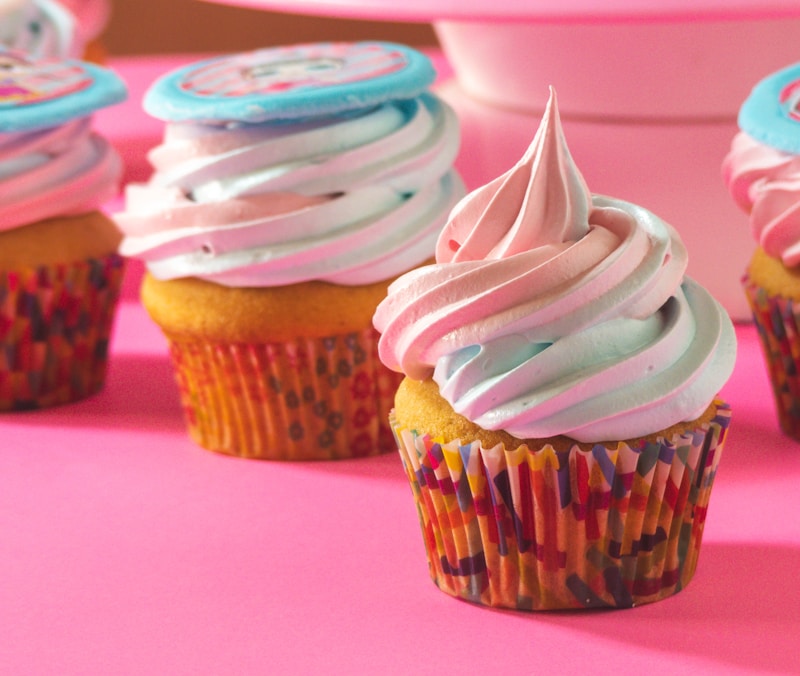
The best healthier Halloween candy alternatives keep the format kids care about — small, wrapped, chocolate-coated, chewy, cold — and change what's inside: dark chocolate instead of milk chocolate, whole dates instead of corn syrup, real fruit purée instead of fruit flavoring, and nuts, seeds, or yogurt for the fat and protein that make a smaller sweet feel like enough. The thirteen swaps below are no-bake or nearly so, they cost less than a bag of fun-size bars, and each one names exactly what it replaces.
One thing first, because it matters more than any recipe here: one night of candy is not the problem. The American Heart Association's 2016 scientific statement in Circulation set the added-sugar ceiling for children ages 2 to 18 at less than 25 grams a day — and according to USDA's Food Surveys Research Group analysis of What We Eat in America, NHANES 2015–2016, US children ages 6 to 11 average 69.5 grams a day. That gap is built on 364 ordinary days, not on October 31st. Halloween is just the day the arithmetic becomes visible. Keep the ritual. Rebuild the ingredients — mostly on the other days.
This article is educational, not medical or nutrition advice. Talk to your pediatrician about your child's diet, especially with food allergies, medical conditions, or feeding concerns.
Key statistics at a glance
- Less than 25 g of added sugar per day for ages 2–18, and no added sugar at all under age 2 — American Heart Association scientific statement, Circulation, 2016
- US children average 44.2 g (ages 2–5), 69.5 g (6–11), and 76.9 g (12–19) of added sugar daily; only about 35% of children 2–19 meet the federal limit of under 10% of calories — USDA Food Surveys Research Group, NHANES 2015–2016
- 61.9% of calories consumed by US youth ages 1–18 come from ultra-processed foods, versus 53.0% for adults — CDC/NCHS Data Brief 536, 2025
- 8 g of added sugar in a single 17 g fun-size Snickers bar; 11 g in one 15 g fun-size pack of Skittles — manufacturer nutrition labels, Mars Wrigley
- The evidence underneath every "keep sugar under 10% of calories" guideline is mostly dental caries data — and it found frequency of exposure mattered more than total quantity — Moynihan, Advances in Nutrition, 2016
- A 1995 JAMA meta-analysis of 23 blinded trials found a single dose of sugar does not acutely affect children's behavior or cognition — though the control arm was an artificial sweetener, and no trial tested a chronic high-sugar diet — Wolraich, Wilson & White
- Americans planned to spend $3.9 billion on Halloween candy in 2025, part of a record $13.1 billion holiday total — National Retail Federation consumer survey, 2025
How much candy do kids actually eat on Halloween?
Honestly? Nobody knows well, and you should be suspicious of anyone who tells you otherwise.
The figures that circulate every October — "the average trick-or-treat haul contains 3,500 to 7,000 calories," "kids collect 22 pounds of candy in one night," "three cups of sugar" — are not peer-reviewed measurements. The calorie range traces to a press quote from Donna Arnett, then head of epidemiology at the University of Alabama at Birmingham School of Public Health, repeated across news coverage without an underlying published dataset. The 22-pound figure appeared in a 2010 ABC News segment attributed to an unpublished University of Colorado analysis. Neither has a methods section anyone can check. We're citing them here only to say plainly: treat them as folklore, not data.
What is measured is more useful anyway. In a 2022 study in Children, researchers gave 38 children ages 5 to 8 free access to eleven candies in two separate sessions and weighed what they ate. Intake averaged 283.6 kcal when candy was offered before a meal and 209.3 kcal after — a difference that did not reach statistical significance. The authors' conclusion was that children's candy intake was high relative to their daily energy needs regardless of timing, and that roughly 60% of the children showed little self-regulation. Meal timing is a weak lever. What's in the bowl is a strong one.
And the everyday baseline is stronger still. Per the USDA's NHANES analysis, sweetened beverages alone supply 28.7% of added sugars for children 6–11 and 36.5% for teens — candy is a smaller slice of a much larger picture.
| Ages 2–5 | 44.2 g |
| Ages 6–11 | 69.5 g |
| Ages 12–19 | 76.9 g |
| AHA limit | 25 g |
Does sugar actually make kids hyperactive?
No — and this is worth saying carefully, because almost every parent has watched it happen.
The most cited evidence is a 1995 meta-analysis in JAMA by Wolraich, Wilson and White, which pooled 23 studies that met four strict criteria: a known quantity of sugar, an artificial-sweetener placebo, blinding of children, parents, and researchers, and reportable effect sizes. The conclusion was that sugar does not affect the behavior or cognitive performance of children. The finding held in the subgroups where you'd most expect it to break — children whose own parents described them as "sugar-sensitive," and children diagnosed with ADHD.
So what are parents seeing? A costume, a dark street, nineteen other children, and a schedule two hours off. Expectation does real work too: in research from the same era, parents told their child had received sugar rated that child as more hyperactive even when the child had received a placebo. On Halloween night specifically, the setting is doing most of the work.
Now read the method again, because it decides how far that conclusion travels. Those trials gave a known quantity of sugar on a single occasion and watched for a behavioral change over the following hours. That is an acute challenge test. It tells you a candy bar does not flip a switch in a child. It says nothing whatsoever about what a diet running on sugar does to a child's mood, attention or sleep across months — which is the thing parents are actually worried about, and which no study in that meta-analysis was built to see.
And notice what the comparison arm was. The strict criteria included an artificial-sweetener placebo — so the control children were drinking aspartame. The finding is therefore "sugar and artificial sweetener produced no detectable difference in acute behavior," which is not the same sentence as "sugar has no effect." If you do not regard an artificial sweetener as an inert substance — and we do not — then a null result against it is a much weaker statement than it is usually reported to be.
None of that overturns the study. It is well designed for the question it asked, and we are not going to tell you sugar causes hyperactivity, because that specific claim did not hold up when it was tested properly. We are telling you the question was narrow.
That's good news, because it means the reason to care about added sugar isn't your child's behavior on Halloween night. It's teeth, what sugar displaces, and the everyday baseline — none of them emergencies, all of them responsive to unglamorous consistency.
What added sugar actually does affect
Teeth. This is the strongest evidence base in the whole conversation, and also the most misreported. The familiar advice is a ceiling — keep sugars under 10% of daily calories, ideally under 5%. The 10% figure rests on moderate-quality observational caries evidence; the 5% figure rests on weaker ecological data. Both are percentages of total calories, which is a number essentially no parent can compute for their kid on a Tuesday.
Read the underlying research and a far more usable finding is sitting right there. Moynihan's 2016 review in Advances in Nutrition — the evidence base those ceilings were built on — found that how often sugar contacts teeth matters more than how much. Every exposure restarts an acid cycle; the mouth needs time between them to remineralize. That single fact is more actionable than any percentage target, and it points somewhere the guideline never goes: one candy sitting is better than a bag grazed all afternoon.
One more thing worth knowing, because it explains the recipe below: sugar pressed out of fruit behaves differently from sugar still locked inside it. Juice and juice concentrate have had the cell-wall matrix destroyed, so the sugar is free in solution. Whole fruit purée keeps the fiber. That is why the gummy recipe uses purée rather than concentrate.
The frequency and stickiness matter as much as the total. A single sitting with a handful of candy, followed by brushing, is a very different exposure than the same candy grazed across six hours of a school afternoon.
Displacement. Per CDC/NCHS Data Brief 536, published August 2025, youth ages 1–18 get 61.9% of their calories from ultra-processed foods — higher than the 53.0% figure for adults. Sweet bakery products, savory snacks, and sweetened beverages were among the top five contributors for both groups. The issue there isn't a moral one; it's that a plate has finite room. This is the terrain question — what the body's internal environment is being built out of, day after day. Our guide to root-cause health and your internal environment works through that logic in more depth.
Commercial candy vs. the homemade swap
All added-sugar figures below are from the manufacturers' own published nutrition labels, at the serving size printed on the package.
| Store-bought treat | Added sugar per labeled serving | Homemade swap | What actually changes |
|---|---|---|---|
| REESE'S Miniatures, 3 pieces (26 g) | 13 g | Dark-chocolate peanut butter cups | 70–85% dark chocolate carries 24 g sugar per 100 g vs. 51.5 g for milk chocolate (USDA); peanut butter with no added sugar |
| SNICKERS fun size, 1 bar (17 g) | 8 g | Date caramel bites | Whole dates keep their fiber matrix — about 1.6 g fiber per pitted Medjool date (USDA) |
| SKITTLES Original fun size, 1 pack (15 g) | 11 g | Real-fruit gummies | Fruit purée plus gelatin; the sugar is intrinsic to whole fruit rather than free sugar |
| KIT KAT snack size, 2 bars (28 g) | 14 g | Coconut clusters or dark-chocolate bark | Unsweetened coconut and nuts supply fat and texture; you set the syrup |
| AHA daily limit, ages 2–18 | 25 g |
| KIT KAT snack size (2 bars, 28 g) | 14 g |
| REESE'S Miniatures (3 pieces, 26 g) | 13 g |
| SKITTLES fun size (1 pack, 15 g) | 11 g |
| SNICKERS fun size (1 bar, 17 g) | 8 g |
That's the whole point of the chart: it isn't that any one of these is alarming. It's that two of them plus a juice box spends the day.
13 healthier Halloween candy swaps kids will actually eat
Every swap below is deliberately shaped like the candy it replaces. Kids are not fooled by a bowl of grapes labeled "nature's candy" — but they are entirely satisfied by a chocolate-coated thing on a stick, because that was what they wanted in the first place.
1. Dark-chocolate peanut butter cups
Replaces: Reese's cups and miniatures. What's in it: 6 oz 70–85% dark chocolate, ½ cup natural peanut butter (peanuts and salt only), 2 tsp maple syrup, pinch of flaky salt. Makes 12 mini cups. Method: Melt the chocolate in 20-second microwave bursts, stirring between each. Spoon 1 tsp into each of 12 mini paper liners and tap the tray flat; freeze 5 minutes. Stir the peanut butter with the maple and salt, add 1 heaping tsp per cup, then cover with the remaining chocolate. Freeze 15 minutes; store in the fridge. The 2 teaspoons of maple across 12 cups works out to well under a gram of added sugar each — the rest depends entirely on which chocolate you buy, so read that label.
2. Date caramel bites
Replaces: Milk Duds, Rolos, caramel-center bars. What's in it: 10 pitted Medjool dates, 1 tbsp almond or peanut butter, 2–3 tbsp warm water, ½ tsp vanilla, ¼ tsp salt; 3 oz dark chocolate for dipping. Method: Soak the dates in hot water 10 minutes, drain, then blend with the nut butter, vanilla, salt, and just enough water to form a thick paste. Roll into 12 balls and freeze 20 minutes so they hold. Dip in melted dark chocolate, finish with flaky salt, and chill 10 minutes. Date paste thickens as it cools because of the fruit's pectin and fiber — that's why it behaves like caramel instead of like syrup.
3. Real-fruit gummies
Replaces: Skittles, Starburst, gummy worms. What's in it: 1 cup fruit purée (blended strawberries, mango, or unsweetened applesauce), 1 tbsp lemon juice, 3 tbsp unflavored gelatin, optional 1 tsp honey. Method: Warm the purée and lemon juice until steaming but not boiling. Sprinkle the gelatin over the surface, let it bloom 1 minute, then whisk hard until completely dissolved. Pour into silicone molds and refrigerate 2 hours. Keeps about a week, covered, in the fridge. Use whole fruit, not juice concentrate — pressing fruit into juice destroys the cell walls holding the sugar, while purée keeps the fiber matrix intact.
4. Chocolate-covered frozen banana coins
Replaces: Junior Mints, Milk Duds, anything small and poppable. What's in it: 2 bananas, 4 oz dark chocolate, 2 tbsp chopped peanuts or shredded coconut. Method: Slice the bananas into ½-inch coins, spread on parchment, and freeze 1 hour until solid. Dip each coin halfway in melted chocolate, scatter the topping while wet, and return to the freezer for 15 minutes. Serve straight from frozen.
5. Chocolate-dipped frozen strawberries
Replaces: Chocolate-covered fruit candies and fruit-cream bars. What's in it: 1 lb strawberries, 4 oz dark chocolate, flaky salt. Method: Wash and dry the berries completely — water seizes chocolate. Dip, set on parchment, chill 15 minutes to harden, then freeze. Frozen berries take on a sorbet texture inside a chocolate shell, which is a genuinely different dessert from a room-temperature one.
6. Coconut clusters
Replaces: Almond Joy, Mounds. What's in it: 2 cups unsweetened coconut flakes, ¼ cup almond butter, 2 tbsp maple syrup, ½ tsp vanilla, ¼ tsp salt, ½ cup sliced almonds. Method: Toss everything together, drop tablespoon mounds onto a lined sheet, and bake at 250°F for 12–15 minutes, stirring once. They crisp as they cool — don't judge the texture hot. Store airtight for 5 days.
7. Cinnamon-maple popcorn mix
Replaces: Caramel corn, kettle corn, snack-size chip bags. What's in it: 8 cups air-popped popcorn, 1 tbsp melted butter or coconut oil, 1 tbsp maple syrup, 1 tsp cinnamon, ½ tsp vanilla, ¼ tsp salt. Method: Whisk the wet ingredients together, drizzle over the popcorn in a large bowl while tossing, then spread on a sheet pan and bake at 300°F for 10 minutes to dry. One tablespoon of maple across eight cups is a rounding error per handful, and the cinnamon and vanilla do most of the perceived-sweetness work. Not for children under 4 — see the safety note below.
8. Apple "donuts"
Replaces: Frosted snack cakes and after-school cookies. What's in it: 2 large apples, ⅓ cup nut or sunflower-seed butter, 2 tbsp mini dark chocolate chips, 2 tbsp shredded coconut or pumpkin seeds, lemon juice. Method: Core the apples, slice crosswise into ½-inch rounds, and brush the cut faces with lemon juice so they don't brown. Spread with nut butter and scatter toppings. Assemble within an hour of serving — these don't hold.
9. No-bake energy bites
Replaces: Granola bars and candy bars in the lunchbox. What's in it: 1 cup rolled oats, ½ cup nut butter, ⅓ cup date paste (from swap 2) or 3 tbsp honey, 2 tbsp ground flaxseed, ¼ cup mini dark chocolate chips, ½ tsp vanilla, pinch of salt. Method: Mix by hand until it holds when squeezed; add a teaspoon of water if it crumbles. Chill 30 minutes, then roll into 14–16 balls. Refrigerate up to a week or freeze up to three months.
10. Dark-chocolate bark with dried fruit
Replaces: Full-size chocolate bars — the ones adults raid the bowl for. What's in it: 8 oz 70% dark chocolate, ⅓ cup chopped dried tart cherries or apricots, ¼ cup pumpkin seeds, flaky salt. Method: Melt the chocolate gently, spread ¼-inch thick on parchment, scatter the toppings while still wet, and press them in lightly. Chill 20 minutes and break into shards. Dried fruit is concentrated sugar, so scatter, don't carpet.
11. Roasted cinnamon chickpeas
Replaces: Crunchy candy-coated snacks and chip bags. What's in it: 1 can chickpeas, 1 tsp extra-virgin olive oil, 1 tsp cinnamon, 1 tsp coconut sugar, pinch of salt. Method: Rinse, drain, and dry the chickpeas thoroughly on a towel — dryness is the whole trick. Toss with oil and roast at 400°F for 30–35 minutes, shaking the pan twice. Toss with the cinnamon, coconut sugar, and salt while hot. Eat the same day; they soften overnight.
12. Frozen yogurt bark
Replaces: Ice cream novelties and frozen candy bars. What's in it: 2 cups plain whole-milk Greek yogurt, 1 tbsp maple syrup, ½ tsp vanilla, 1 cup berries, 2 tbsp shaved dark chocolate. Method: Stir the yogurt with maple and vanilla, spread ¼-inch thick on a parchment-lined sheet, scatter the berries and chocolate, and freeze 3 hours. Break into pieces and keep frozen. The protein and fat in whole-milk yogurt are the reason one piece tends to be enough.
13. Build-your-own trail mix packs
Replaces: The pre-filled goodie bag. What's in it: Per bag, about ½ cup total: almonds or cashews, pumpkin seeds, dark chocolate chips, freeze-dried strawberries, unsweetened coconut flakes. Method: Set out bowls and let kids fill their own small bags — the choosing is most of the appeal. Freeze-dried fruit brings intense sweetness with the water removed and nothing added, which is why it beats candied fruit here. Use seeds instead of nuts for anyone under 4 or in a nut-free classroom.
Why these taste sweet with less sweetener
Aroma is doing half the work. Odor-induced sweetness enhancement is a well-documented cross-modal effect: certain smells make the same amount of sugar taste sweeter. In a dynamic sensory study published in Food Research International, a 25% sugar reduction in yogurt formulated with 0.2% vanilla flavor did not measurably reduce perceived sweetness or liking. That's why vanilla appears in nearly every recipe above and why it's added off the heat, where the volatiles survive.
Salt releases sweetness by suppressing bitterness. Breslin and Beauchamp showed in a 1997 paper in Nature that sodium selectively suppresses bitter tastes more than palatable ones, letting sweetness come forward. Sodium raises the activation threshold of certain bitter receptors — TAS2R16 among them, per a 2024 study in Chemical Senses on human bitter receptor responses to sodium chloride. A pinch of flaky salt on a dark-chocolate cup is not decoration; it's what makes 70% chocolate read as sweet rather than bitter.
Fiber changes the delivery, not the arithmetic. A pitted Medjool date carries about 16 g of sugars alongside 1.6 g of fiber and 167 mg of potassium, per USDA FoodData Central. The sugar is still sugar. What differs is the matrix it arrives in — intact fruit fiber, not extracted syrup. That distinction is real, and it is also smaller than the internet suggests. Date syrup has no such advantage.
Fat and protein make a smaller sweet feel finished. This is why the peanut butter cup, the yogurt bark, and the trail mix work at portions that a fun-size Skittles pack cannot match: there's something to chew and something to digest. Our food chart breaks down which ingredients we treat as everyday, occasional, and rare, sweeteners included.
Is homemade actually healthier — or is that just a story we tell?
Partly a story. Be honest with yourself about it.
Maple syrup, honey, coconut sugar, agave, and date syrup are added sugars. The FDA's June 2019 final guidance on Nutrition Facts labeling confirmed that pure honey and pure maple syrup must carry an added-sugars percent Daily Value on the label, precisely because they contribute to the same total. There is no metabolically free sweetener in this article. The advantage of making it yourself is narrower and more real than "natural is better": you control the amount, and you can keep cutting it. Start at the quantities above, then take out a third next time — most kids never notice when vanilla, cinnamon, and salt are carrying the flavor.
The second honest advantage is what isn't in it. No fruit-flavored coloring, no partially hydrogenated anything, no formulation engineered for a bliss point. Given that 61.9% of youth calories already come from ultra-processed foods, a homemade treat is one line item moved out of that column.
And the third: these are supports, not substitutes for the daily pattern. Nothing here treats or prevents anything. If you want the everyday version of this work rather than the October version, start with our guide to inflammatory foods and what to eat instead or daily habits for digestion.
A safety note for younger children
This matters more on Halloween than any other night, because small hard things end up in reach of small children.
In a 2013 Pediatrics study by Chapin and colleagues at Nationwide Children's Hospital with the CDC, an estimated 111,914 US children aged 14 and under were treated in emergency departments for nonfatal food-related choking between 2001 and 2009 — about 12,435 a year. Hard candy was the single most common food involved at 15.5% of cases, with other candy second at 12.8%. The AAP's 2010 policy statement Prevention of Choking Among Children lists hard candy, whole nuts, seeds, popcorn, whole grapes, marshmallows, chunks of peanut butter, and chewing gum among high-risk foods, and notes that children under 4 have not finished getting their molars or learning to grind food.
Practically: for children under 4, skip whole nuts, popcorn, and hard candy entirely. In this article that means swaps 7 and 13 need modification — use seeds instead of nuts, and hold the popcorn. Spread nut butter thin rather than serving it in spoonfuls. Cut grapes and firm fruit lengthwise. And keep young children seated and supervised while eating, which is the hardest rule to follow on a night when nobody is sitting down.
Handling the actual candy haul without a fight
The trick-or-treating stays. Restriction tends to make the restricted thing louder, and there is no version of this where a five-year-old is talked out of Halloween.
- Give out non-candy treats at your own door. Schwartz, Chen and Brownell's 2003 study in the Journal of Nutrition Education and Behavior offered trick-or-treaters aged 3 to 14 a choice between comparable small toys and candy at seven Connecticut households. Of 283 children observed, 52.3% took candy and 47.7% took a toy — statistically a coin flip. Glow sticks, stickers, and temporary tattoos are not a consolation prize to a seven-year-old.
- Let the haul be a haul on the night. The 2022 Children study found meal timing didn't significantly change intake. Fighting over pieces four and five costs more than it returns.
- Then change the default the next morning. Put the homemade swaps in the fridge at eye level and let the wrapped candy live in a cupboard. Availability beats negotiation.
- Concentrate the exposure, then brush. Frequency of sugar contact is the caries driver in the underlying research; six grazing hours is a worse exposure than one sitting.
None of this requires a new personality — just a slightly better default, repeated. If you want that structured rather than improvised, the Sakred app is built to hold exactly this kind of small daily consistency, and while you're thinking about your family's long game, it's worth knowing where your coverage stands too.
Frequently asked questions
How much Halloween candy is too much for a child? There's no evidence-based number for a single night, and anyone quoting one is guessing. The anchor that does exist is the AHA's 2016 recommendation of under 25 g of added sugar per day for ages 2–18, and no added sugar under age 2. In practice two to three fun-size pieces spends most of a day's allowance — one fun-size Snickers is 8 g, one fun-size Skittles pack is 11 g, per the manufacturers' labels. Rather than policing the night, most families get more out of adjusting the following two weeks.
Will Halloween candy make my kid hyper? Almost certainly not from the sugar on the night itself. The 1995 JAMA meta-analysis by Wolraich and colleagues pooled 23 blinded trials and found no effect of a single sugar dose on children's behavior or cognition, including in children their parents called sugar-sensitive and children with ADHD. Costumes, crowds, darkness and a disrupted bedtime are more than sufficient explanation.
Two limits worth carrying, though. Those were acute challenge tests — one dose, one afternoon — so they say nothing about what a high-sugar diet does over months. And the control arm was an artificial sweetener, meaning the finding is really "sugar and aspartame did not differ," which is a weaker claim than it usually gets reported as.
Are honey and maple syrup healthier than the sugar in candy? They are added sugars, and the FDA's 2019 final guidance requires pure honey and pure maple syrup to declare an added-sugars percent Daily Value for that reason. They bring trace minerals and much more flavor per gram, which is genuinely useful — you can use less. But treat any recipe calling them "refined-sugar-free" as a marketing sentence, not a nutrition one.
Which of these swaps travels best for a class party? Energy bites, dark-chocolate bark, coconut clusters, and trail mix packs are shelf-stable for hours and need no refrigeration. The frozen swaps — banana coins, dipped strawberries, yogurt bark — need a cooler and will not survive a school day. Check the classroom's allergy policy first; seed butters and pumpkin seeds substitute cleanly for nuts in every recipe above.
Sources
- American Heart Association / Circulation — Added Sugars and Cardiovascular Disease Risk in Children: A Scientific Statement (2016)
- USDA Food Surveys Research Group — Added Sugars in American Children's Diet: What We Eat in America, NHANES 2015–2016 (2019)
- CDC/NCHS — Data Brief 536: Ultra-processed Food Consumption in Youth and Adults, United States, August 2021–August 2023 (2025)
- Advances in Nutrition — Effect on Caries of Restricting Sugars Intake, Moynihan (2016)
- JAMA — Wolraich, Wilson & White, The Effect of Sugar on Behavior or Cognition in Children: A Meta-analysis (1995)
- Children (Basel) — Children Consume High Amounts of Candy Before and After a Meal: Within-Person Comparisons of Children's Candy Intake (2022)
- Pediatrics — Chapin et al., Nonfatal Choking on Food Among Children 14 Years or Younger in the United States, 2001–2009 (2013)
- American Academy of Pediatrics — Policy Statement: Prevention of Choking Among Children (2010)
- Journal of Nutrition Education and Behavior — Schwartz, Chen & Brownell, Trick, Treat, or Toy: Children Are Just as Likely to Choose Toys as Candy on Halloween (2003)
- Nature — Breslin & Beauchamp, Salt Enhances Flavour by Suppressing Bitterness (1997)
- Chemical Senses / PMC — Influence of Sodium Chloride on Human Bitter Taste Receptor Responses (2024)
- Food Research International — Use of Strawberry and Vanilla Natural Flavors for Sugar Reduction: A Dynamic Sensory Study with Yogurt (2021)
- US Food and Drug Administration — Final Guidance: Declaration of Added Sugars on Honey, Maple Syrup, and Certain Cranberry Products (2019)
- USDA FoodData Central — Chocolate, dark, 70–85% cacao solids; Candies, milk chocolate; Dates, medjool
- SNICKERS (Mars Wrigley) — Fun Size Chocolate Candy Bars nutrition label
- SKITTLES (Mars Wrigley) — Original Fun Size Chewy Candy nutrition label
- The Hershey Company — REESE'S Miniatures Milk Chocolate Peanut Butter Cups nutrition label
- The Hershey Company — KIT KAT Milk Chocolate Snack Size Candy Bars nutrition label
- National Retail Federation — Consumer Survey Finds Halloween Spending to Reach Record $13.1 Billion (2025)
- ABC News — The Trick for Healthy Treats (2010), cited only as the origin of the unverified "22 pounds" claim