The Healthy Pumpkin Spice Latte: 12 Grams of Sugar Instead of 32
A Starbucks Grande pumpkin spice latte carries about 32 grams of added sugar — more than the AHA's entire daily limit for women. Here is a real-pumpkin version at 12 grams, plus the sensory science that lets you use less sweetener without losing the drink.

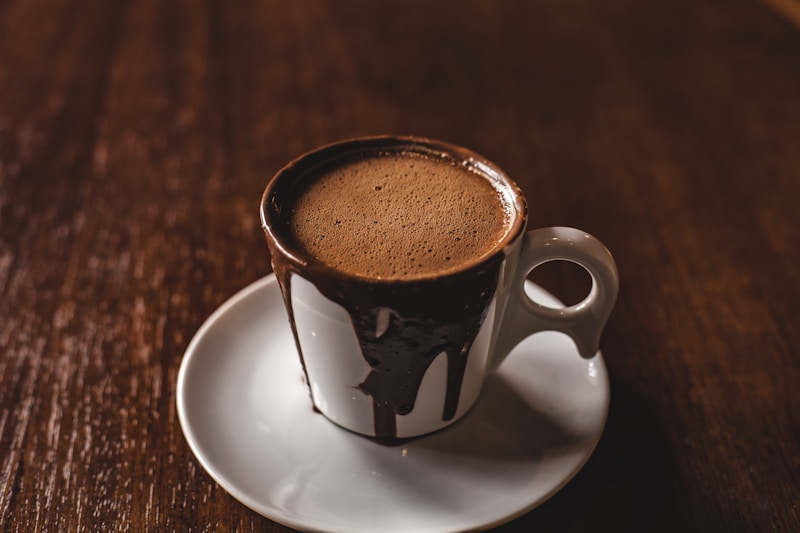
A healthy pumpkin spice latte is made from real pumpkin purée, espresso or strong coffee, the milk you actually like, four warm spices, vanilla, a pinch of salt, and one tablespoon of a maple spice syrup you batch in advance. Built this way, a 12-ounce drink carries about 12 grams of added sugar and roughly 22 grams of total sugar, compared with the 50 grams of sugar — about 32 of them added — in a Grande Starbucks Pumpkin Spice Latte with 2% milk, as analyzed by the Center for Science in the Public Interest in 2025. Nobody craves pumpkin sauce. People crave warmth, aroma, and the ritual. All of that is reproducible.
This article is educational, not medical advice. It is a recipe, not a treatment for anything.
Key statistics at a glance
- 390 calories and 50 grams of sugar in a 16-ounce Grande Pumpkin Spice Latte made with 2% milk, of which roughly 32 grams — about 7½ teaspoons — is added sugar (Center for Science in the Public Interest, 2025)
- 50 grams is the FDA's entire Daily Value for added sugars, based on less than 10% of a 2,000-calorie diet
- 25 grams for women, 36 grams for men — the American Heart Association's daily added-sugar ceilings
- 12–13% of total daily calories come from added sugars for Americans aged 2 and older, against the AHA's preferred ceiling of 6% (American Heart Association, 2025); Harvard's Nutrition Source puts the average at about 17 teaspoons, or 270 calories, a day
- 53.0% of US adult calories came from ultra-processed foods in August 2021–August 2023 (CDC/NCHS Data Brief 536, 2025)
- RR 1.20 (95% CI 1.15–1.25) for type 2 diabetes per additional daily serving of sugar-sweetened beverages across 72 prospective cohort studies (Li et al., Frontiers in Nutrition, 2023) — an observational association, not proof of cause
- 17,003 micrograms of beta-carotene and 7.1 grams of fiber per cup of plain canned pumpkin, for 83 calories (USDA FoodData Central)
Every spice in "pumpkin spice" is a warming digestive
The blend did not come from a coffee chain. Cinnamon, ginger, nutmeg, clove and allspice are warming, digestive spices in Ayurveda and Chinese medicine alike — the category of things taken with or after a heavy meal, in autumn and winter, precisely because they were understood to help you handle food and cold. That combination has been showing up in autumn cooking for centuries for reasons that had nothing to do with a seasonal marketing calendar.
Which makes the modern version a strange object. The spices are still in there, in trace amounts, suspended in 32 grams of sugar — and they are the only part of the drink anyone historically considered functional. The sugar is the addition. The spice is the original.
That is the whole logic of this recipe. Keep the aromatics, and let them do the work they were always there to do — including the work of making a much smaller amount of sugar taste like enough.
Commercial vs. homemade, honestly
| Grande PSL, 2% milk | This recipe, 12 oz | |
|---|---|---|
| Calories | 390 | ~180–220, depending on milk |
| Total sugars | 50 g | ~22 g |
| Added sugars | ~32 g | 12 g (1 tbsp spice syrup) |
| Sweetener | Pumpkin spice sauce (sugar, condensed milk, purée, preservative) | Pure maple syrup or date paste |
| Real pumpkin | Present in the sauce, in unstated amount | 2 tbsp purée per drink |
| Sweetness you control | No | Yes — by the half tablespoon |
It is not just less sugar — it is a different kind of sugar
This distinction gets flattened constantly, in both directions, so here it is precisely.
First, a correction to the version you usually hear: Starbucks is not using artificial sweetener. Classic Syrup is sugar and water; the pumpkin spice sauce is built on real sugar and condensed milk. The difference between their drink and this one is not real sugar versus fake sugar. Anyone making that claim is handing critics an easy correction.
The real difference is what the sugar arrives inside, and it forms a hierarchy rather than a binary:
| Sweetener | What it actually is | Fiber intact? | Honest verdict |
|---|---|---|---|
| Whole dates / date sugar | Dried whole dates, ground. Nothing removed. | Yes | Genuinely different — the fiber matrix is still there |
| Pure maple syrup | Boiled tree sap. Trace manganese and zinc. | No | Real food, but the sugar is free sugar |
| Coconut sugar | Boiled palm sap. Trace minerals plus some inulin. | Mostly no | Marginally different; ~70–80% sucrose |
| Cane sugar / HFCS / flavored sauce | Refined free sugar in solution | No | Sugar, and only sugar |
The one with real evidence behind it is dates, and it is worth being specific about why. Dates are more than 70% sugar — nobody should pretend otherwise — and yet across five varieties tested in both healthy and type 2 diabetic subjects, they measured a glycemic index of roughly 44 to 55, in the low-to-medium range, with no significant post-meal glucose excursions in the diabetic group (Alkaabi et al., Nutrition Journal, 2011). The fiber the fruit came with is still doing its job.
Date sugar keeps that advantage because it is not really a sugar at all — it is dehydrated whole dates, milled. Date syrup does not, because the fiber has been strained out.
Where we will not overclaim: coconut sugar is not meaningfully different from cane sugar metabolically. It is roughly 70–80% sucrose, and the widely repeated low-GI figure for it traces to a single small analysis that has not replicated well. We use it in small amounts for flavor, not because it is a health food. And FDA counts every sweetener in that table — dates, maple, coconut and cane alike — as added sugars on a Nutrition Facts label.
So the accurate claim is this: less sugar, and where possible sugar that still has its fiber attached. That is a defensible sentence. "Our sugar is real and theirs is fake" is not, and the first one is the stronger argument anyway.
Full breakdown, including why agave's low glycemic index is misleading and where coconut sugar's reputation came from: which sugar substitute is actually healthiest.
| Grande PSL — cane sugar sauce + syrup | 32g |
| AHA limit, men | 36g |
| AHA limit, women | 25g |
| This recipe, 12 oz — maple or date paste | 12g |
One Grande uses 128% of a woman's entire daily added-sugar allowance from the AHA, and 89% of a man's. That is the whole argument. It isn't that pumpkin spice is bad; it's that a seasonal drink shouldn't spend a full day's budget before lunch.
Below, the first ten items make one 12-ounce drink; the last eight make a batch of warm spice syrup — about 3/4 cup, or twelve 1-tablespoon servings that keep in the fridge.
Ingredients
- 2 tablespoons (30 g) unsweetened pumpkin purée, canned or homemade
- 2 shots (2 oz / 60 ml) hot espresso, or 1/2 cup strong brewed coffee
- 3/4 cup (180 ml) milk of choice — dairy, oat, or whole-fat coconut
- 1 tablespoon warm spice syrup (made below), or 1 tablespoon date paste
- 1/8 teaspoon ground cinnamon
- 1/8 teaspoon freshly grated nutmeg
- 1/8 teaspoon ground ginger
- 1 pinch ground clove, about 1/16 teaspoon (it dominates fast)
- 1/4 teaspoon pure vanilla extract, stirred in off the heat
- 1 generous pinch fine sea salt, about 1/16 teaspoon
- For the spice syrup batch: 3/4 cup (180 ml) pure maple syrup
- For the spice syrup batch: 1/4 cup (60 ml) water
- For the spice syrup batch: 2 cinnamon sticks, or 1 teaspoon ground cinnamon
- For the spice syrup batch: 6 whole cloves
- For the spice syrup batch: 1 teaspoon ground ginger
- For the spice syrup batch: 1/2 teaspoon freshly grated nutmeg
- For the spice syrup batch: 1/4 teaspoon fine sea salt
- For the spice syrup batch: 1 tablespoon pure vanilla extract, stirred in off the heat
Instructions
- Make the syrup first: combine maple syrup, water, cinnamon, cloves, ginger, nutmeg, and salt in a small saucepan.
- Bring to a bare simmer over medium-low heat and hold it there for 5 minutes, stirring once or twice — do not let it boil hard, which drives off aroma.
- Take the pan off the heat, stir in the vanilla extract, and let the syrup cool uncovered for 20 minutes so the spices keep infusing.
- Strain through a fine sieve into a clean, dry glass jar; you should have roughly 3/4 cup. Seal and refrigerate.
- For the drink: whisk the pumpkin purée, cinnamon, nutmeg, ginger, clove, and salt in a small saucepan over medium heat for 60 seconds, until the mixture darkens slightly and smells toasted.
- Add the milk and 1 tablespoon of spice syrup. Whisk constantly and heat to about 150°F (65°C) — steaming, with small bubbles at the edge, never boiling.
- Remove from heat and stir in the vanilla extract.
- Pull the espresso (or brew the coffee) into a 12-ounce mug.
- Blend or vigorously whisk the pumpkin milk for 20–30 seconds until frothy, then pour it over the coffee.
- Taste before adding anything else. If it needs more, add syrup a half tablespoon at a time and dust with cinnamon.
Why this works with a third of the sugar
The technique is not willpower. It is sensory engineering, and it rests on three real effects.
Vanilla makes sugar taste like more sugar. Bertelsen and colleagues, in Chemical Senses (2020), screened five aromas — vanilla, honey, banana, elderflower, and raspberry — across three sucrose concentrations and found samples with vanilla, honey, or banana aroma rated significantly sweeter than the same solutions with elderflower or raspberry. The same team's Foods study (2020) tested vanilla with 129 young adults at 2.5%, 5%, and 7.5% sucrose and found significant increases in sweet-taste ratings, though the effect varied by sex and age. Their 2021 follow-up in Food Quality and Preference, with 159 Chinese and 161 Danish consumers, found that consumers in both countries rated samples with added vanilla aroma as sweeter than identical samples without it. The mechanism is cross-modal: retronasal aroma and taste arrive together and the brain integrates them, and congruent pairings enhance while incongruent ones do not. This is why the vanilla goes in off the heat. Boiling it off is throwing away sweetness you already paid for.
Cinnamon is doing sensory work, not metabolic work. Cinnamon reads as sweet largely because we have encountered it almost only in sweet contexts. A 2025 bioRxiv preprint (not yet peer-reviewed) reported that cinnamaldehyde activates the T1R2/T1R3 sweet-taste receptor in cultured cells and amplifies the response to other sweeteners — a cell-based finding, to be held loosely. What should be held firmly: we are not claiming cinnamon controls blood sugar. The clinical evidence there is mixed, and it is not why cinnamon is in this recipe. It is here for aroma, and because aroma lets you use less syrup.
Salt works by subtraction. Breslin and Beauchamp's 1997 paper in Nature showed that adding sodium to a mixture of sugar and a bitter compound increased perceived sweetness — but adding the same sodium to a sugar solution with no bitterness present changed nothing. Salt doesn't create sweetness; it removes the bitterness that was masking it. A 2024 study in the Journal of Agricultural and Food Chemistry found sodium chloride reduced signaling at specific human bitter taste receptors, including TAS2R16. Coffee is the bitter compound here. That pinch of salt is the highest-leverage ingredient on the list, and the one most people skip.
Fat and protein make a smaller amount of sweetness satisfying. Whole milk, oat milk, or coconut milk gives the drink body, and body is why less sweetness registers as enough. A skim version tastes thinner and tempts you into more syrup. Milk also supplies the drink's other sugars — about 12 grams of lactose per cup of 2% milk (USDA FoodData Central) — naturally occurring, not added.
Is a homemade pumpkin spice latte actually healthier?
It is lower in added sugar. That is the honest claim, and it is the only one worth making.
Per additional daily serving of sugar-sweetened beverages, Li and colleagues' 2023 meta-analysis in Frontiers in Nutrition — 72 prospective cohort studies, follow-up from 4 to 38 years — reported relative risks of 1.20 for type 2 diabetes, 1.10 for hypertension, 1.20 for coronary heart disease, and 1.08 for all-cause mortality. That is a consistent dose-response association across a large body of cohort data. It is not causation in any individual, and the authors say so plainly: every included study was observational, residual confounding cannot be ruled out, and Egger's test flagged possible publication bias for the diabetes outcome.
The reasonable reading is not "one latte will harm you." It is that a daily 32-gram habit is a pattern, and patterns are what the data is about. In terrain terms, the question is what your internal environment is fed on most mornings. Ultra-processed foods supplied 53.0% of US adult calories in 2021–2023 (CDC/NCHS, 2025); rebuilding one daily ritual from whole ingredients is a small, durable move against that share — the kind of thing that only works with consistency over intensity.
Can you make it without refined sugar?
You can make it without refined sugar. You cannot make it sweet without added sugar, and it matters that we say so plainly.
Maple syrup, honey, coconut sugar, agave, and date syrup are all added sugars. The FDA's definition covers sugars added during processing, foods packaged as sweeteners, and sugars from syrups and honey — and single-ingredient products like pure maple syrup and honey must still declare a percent Daily Value for added sugars on the Nutrition Facts label. One tablespoon of pure maple syrup carries about 12.1 grams of sugar and 52 calories (USDA FoodData Central). The advantage of this recipe is not that maple syrup is metabolically free. It is that a tablespoon is a tablespoon, and you are the one holding the spoon.
| Grande PSL, 2% milk | 50g (Total sugars) | 32g (Added sugars) |
| This recipe, 12 oz | 22g (Total sugars) | 12g (Added sugars) |
Whole dates are a genuinely different case. In date paste, the fruit's fiber matrix is still intact — USDA FoodData Central lists Medjool dates at 6.7 grams of fiber and 66 grams of sugar per 100 grams. That fiber is not a license to use more; it is a texture and structure difference. Date paste thickens as it cools and hangs on the palate longer than a thin syrup does, which is a practical advantage in a latte. To make it: soak 10 pitted Medjool dates in just-boiled water for 20 minutes, then blend with 1/3 cup of the soaking liquid, 1/2 teaspoon cinnamon, and a pinch of salt until completely smooth. Use 1 tablespoon per drink.
There is more on where different sweeteners sit in our food chart, and on the broader pattern in inflammatory foods and what to eat instead.
How do you make it taste like Starbucks?
Four adjustments, in order of impact:
- Toast the purée and spices in the dry pan first. Sixty seconds over medium heat before any liquid goes in. Raw canned pumpkin tastes flat and vegetal; heat drives the Maillard and caramelization reactions that produce the roasted note the commercial sauce gets from condensed milk.
- Do not skip the salt. See the Breslin and Beauchamp finding above. This is the difference between "healthy version" and "the drink."
- Add vanilla off the heat. Vanillin is volatile. Every minute it simmers, you lose perceived sweetness you have to buy back with syrup.
- Froth hard. Aeration changes mouthfeel and pushes aroma into the retronasal path as you drink. Twenty to thirty seconds in a blender or with a handheld frother.
What you cannot fully replicate is the whipped cream and caramelized sugar topping — which is also where a meaningful share of the commercial drink's added sugar lives. Unsweetened whipped cream and a dusting of cinnamon gets close.
Can it be made dairy-free?
Yes, and milk choice changes the drink more than any other substitution.
- Oat milk is the closest match for body and foam. Many commercial oat milks contain added sugars produced by enzymatic hydrolysis of the oat starch — check the added-sugars line and adjust your syrup down accordingly.
- Whole-fat canned coconut milk, thinned 1:1 with water, gives the richest result; the fat carries spice aroma well.
- Almond milk is thinnest and leans hardest on the salt and vanilla. Use unsweetened and expect to want a half tablespoon more syrup.
- Soy milk froths reliably and brings protein, which helps the drink hold you.
If you're working on digestion, dairy is a signal worth testing rather than assuming — our post on daily habits for gut health covers running that as an investigation, not a restriction.
How long does the syrup keep?
About three to four weeks, refrigerated, in a clean airtight jar. Here is the actual reason, because "it keeps a while" is not useful.
Sugar preserves by lowering water activity — binding free water so microbes cannot use it. According to the UC Master Food Preserver Program (2025), most bacteria need a water activity above 0.91 to grow and most yeasts above 0.88, but molds survive down to roughly 0.65. A syrup at maple syrup's own concentration sits well above the mold threshold. That is exactly why a bottle of pure maple syrup says refrigerate after opening: the sugar stops the bacteria, and the cold does the remaining work against mold and osmophilic yeast. Neither is permanent.
So: strain the whole spices out (particulates give mold a foothold), use a jar washed in hot soapy water and dried completely, keep it on a middle shelf rather than the door where temperature swings, and discard at the first sign of fuzz, cloudiness, ropiness, or a fermented smell.
Date paste keeps far less time — about 5 to 7 days, refrigerated. It is a purée, not a concentrate; water activity is high and fiber offers no preservative effect. Freeze it in an ice cube tray if you want a month.
Opened canned pumpkin: 5 to 7 days refrigerated, moved out of the can into a sealed container — it is a low-acid food. Freezing it in 2-tablespoon portions is the practical move for a season of lattes: one cube, one drink.
What to do with the rest of the can
A 15-ounce can holds roughly seven drinks' worth of purée and, per USDA FoodData Central, a cup of plain canned pumpkin delivers 17,003 micrograms of beta-carotene, 1,906 micrograms RAE of vitamin A, and 7.1 grams of fiber for 83 calories. That is a genuinely nutrient-dense ingredient sitting in your fridge with a one-week clock on it. Portion it, freeze it, and the ritual costs you two minutes a morning for the next month.
That is the whole method for the season ahead: keep the ritual, rebuild the ingredients, and let aroma and salt do the work sugar used to do. If you want the swaps tracked alongside the rest of your routine, the Sakred app is built for exactly that kind of daily, unglamorous consistency.
Frequently asked questions
How much sugar is in a Starbucks pumpkin spice latte?
A Grande (16 oz) Pumpkin Spice Latte made with 2% milk contains 390 calories and 50 grams of total sugar, of which roughly 32 grams — about 7½ teaspoons — is added sugar, according to the Center for Science in the Public Interest's 2025 analysis of Starbucks nutrition data. That added-sugar figure exceeds the American Heart Association's entire daily limit for women (25 g) and comes close to the limit for men (36 g).
Is maple syrup healthier than the sugar in a commercial PSL?
Not meaningfully, gram for gram. The FDA counts sugars from syrups and honey as added sugars, and a tablespoon of pure maple syrup contains about 12.1 grams of sugar (USDA FoodData Central). The advantage of the homemade version is quantity control — one measured tablespoon instead of a pumped sauce — not the source of the sugar.
Can I make this with instant coffee instead of espresso?
Yes. Dissolve 2 teaspoons of instant coffee in 2 ounces of hot water and use it in place of the espresso shots. The drink relies on the coffee being strong enough to stand up to 3/4 cup of milk; a weak brew will taste like sweetened milk and push you toward more syrup.
Does this recipe help with blood sugar?
We make no such claim. It is a recipe with less added sugar than a commercial equivalent — nothing more. Cinnamon is here for aroma and perceived sweetness, not for any metabolic effect; the clinical evidence on cinnamon and blood glucose is mixed, and anyone managing diabetes or another condition should talk to their clinician rather than a recipe.
Sources
- Center for Science in the Public Interest — How much sugar is in a pumpkin spice latte? (2025)
- Ochsner Health — 4 Ways to Order a Healthier Pumpkin Spice Latte From Starbucks (2025)
- American Heart Association — How Much Sugar Is Too Much? (2025)
- US Food and Drug Administration — Added Sugars on the Nutrition Facts Label
- US Food and Drug Administration — Guidance for Industry: Declaration of Added Sugars on Honey, Maple Syrup, Other Single-Ingredient Sugars and Syrups (2019)
- Harvard T.H. Chan School of Public Health, The Nutrition Source — Added Sugar in the Diet
- CDC / National Center for Health Statistics — Data Brief 536: Ultra-processed Food Consumption in Youth and Adults, United States, August 2021–August 2023 (2025)
- Li B. et al., Frontiers in Nutrition — Consumption of sugar sweetened beverages, artificially sweetened beverages and fruit juices and risk of type 2 diabetes, hypertension, cardiovascular disease, and mortality: A meta-analysis (2023)
- Bertelsen A.S., Mielby L.A., Alexi N., Byrne D.V., Kidmose U., Chemical Senses — Sweetness Enhancement by Aromas: Measured by Descriptive Sensory Analysis and Relative to Reference Scaling (2020)
- Bertelsen A.S. et al., Foods — Individual Differences in Sweetness Ratings and Cross-Modal Aroma-Taste Interactions (2020)
- Bertelsen A.S., Zeng Y., Mielby L.A., Sun Y.-X., Byrne D.V., Kidmose U., Food Quality and Preference — Cross-modal Effect of Vanilla Aroma on Sweetness of Different Sweeteners among Chinese and Danish Consumers (2021)
- Breslin P.A.S. & Beauchamp G.K., Nature — Salt enhances flavour by suppressing bitterness (1997)
- Journal of Agricultural and Food Chemistry — Influence of Sodium Chloride on Human Bitter Taste Receptor Responses (2024)
- bioRxiv preprint — The Renowned Flavor Compound Cinnamaldehyde Induces Sweet Taste by Targeting the Transmembrane Domain of T1R3 in the Sweet Taste Receptor (2025)
- UC Master Food Preserver Program — Water Activity and its Role in Food Preservation (2025)
- USDA FoodData Central — Pumpkin, canned, without salt
- USDA FoodData Central — Dates, Medjool
- USDA FoodData Central — Milk, reduced fat, fluid, 2% milkfat