What 3 Trendy Starbucks Orders Actually Do to Your Body
The pumpkin spice latte, the chai latte and the pumpkin cream cold brew, by their published numbers — sugar, caffeine and calories against the daily limits — plus the version of each you can make for a fraction of the sugar.

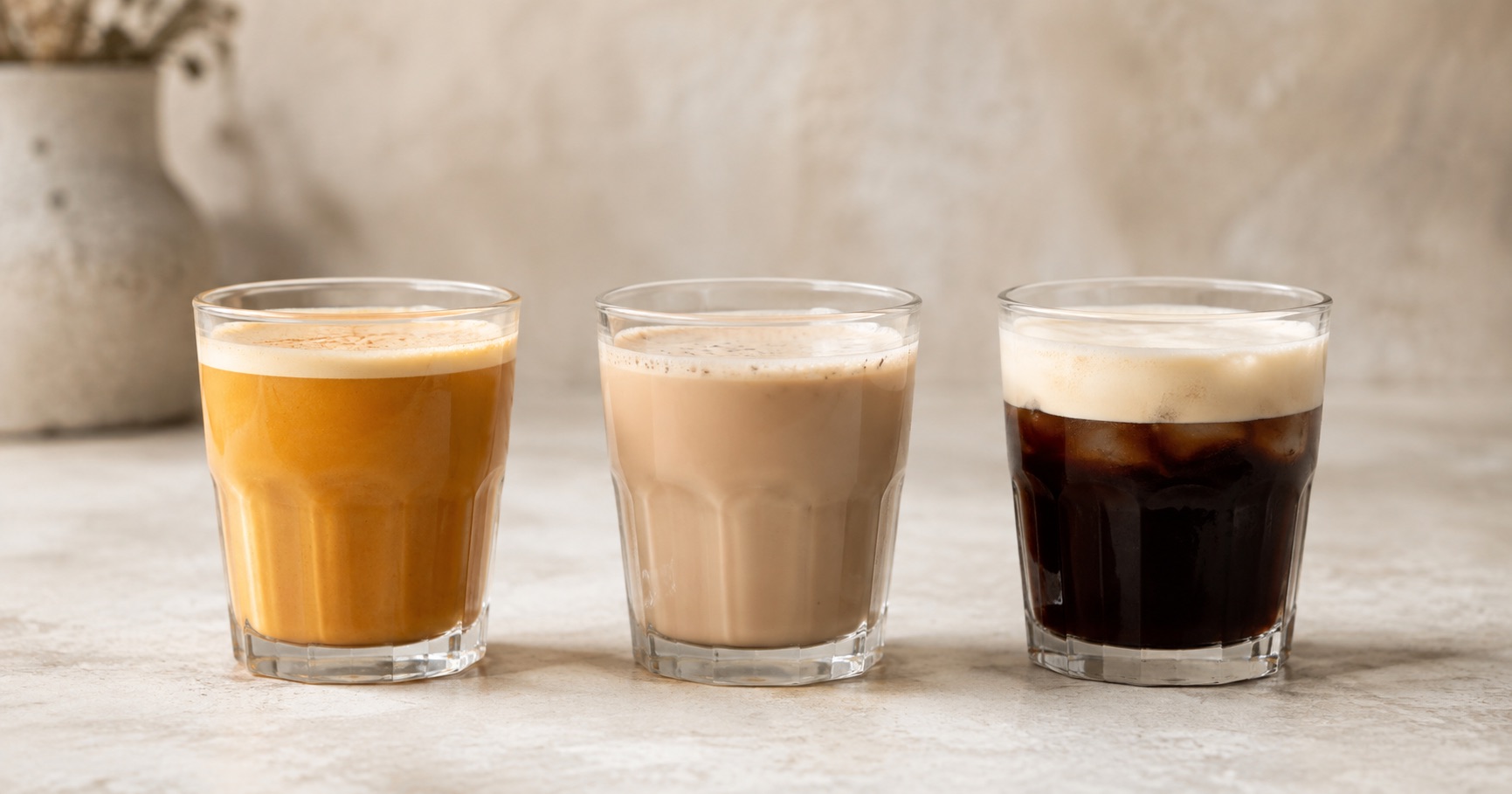
Three of the most-ordered seasonal drinks at Starbucks — the Pumpkin Spice Latte, the Chai Latte and the Pumpkin Cream Cold Brew — carry 50, 29 and 31 grams of sugar in a Grande, against an American Heart Association daily added-sugar limit of 25 grams for women and 36 for men. Caffeine ranges from 55 mg in the chai to 150 mg in the PSL. Calories run 190 to 390.
Those are the numbers. This article does two things with them: explains what each one actually does once it is in you, and links to a version of every drink you can make at home for roughly a quarter of the sugar. The point is not that these drinks are bad. It is that the sweetness in all three is decided by a syrup pump before anyone hands you the cup — and that is a variable you can take back.
This article is educational, not medical or nutrition advice. Sakred Health is not affiliated with or endorsed by Starbucks; all figures come from Starbucks' published nutrition data or the named third party. Talk to your doctor before making dietary changes, especially if you're pregnant, nursing, managing blood sugar, or taking medication.
Key statistics at a glance
The three drinks, side by side
| Grande (16 oz) | Calories | Sugar | Caffeine | Our version |
|---|---|---|---|---|
| Pumpkin Spice Latte, 2% milk | 390 | 50 g (~32 g added) | 150 mg | 12 g added sugar |
| Chai Latte | 190 | 29 g | 55 mg | 6 g added sugar |
| Pumpkin Cream Cold Brew | 250 | 31 g | ~185 mg | 8 g added sugar |
PSL figures are from the Center for Science in the Public Interest's 2025 analysis of Starbucks data; chai figures from Starbucks' published nutrition information; cold brew from CSPI's 2025 analysis.
| Pumpkin Spice Latte | 50 g |
| Pumpkin Cream Cold Brew | 31 g |
| Chai Latte | 29 g |
| AHA daily limit, women | 25 g |
| Homemade PSL | 22 g |
| Homemade cold foam | 12 g |
| Homemade chai | 6 g |
Sugar is only half of what these drinks deliver. The other half is caffeine, and it varies far more between them than most people expect — the cold brew carries more than three times the chai.
| Pumpkin Cream Cold Brew | 185 mg |
| Pumpkin Spice Latte | 150 mg |
| Chai Latte | 55 mg |
Two of these before noon puts you within range of FDA's 400 mg reference point before any other source of caffeine in the day is counted. That is not a warning — FDA describes 400 mg as the level not generally associated with negative effects — but it is worth knowing which drink is which, since nothing on the menu board distinguishes a 55 mg order from a 185 mg one.
Homemade bars show total sugars, including milk lactose, so the comparison is like for like.
1. The Pumpkin Spice Latte
What it is: two espresso shots, steamed milk, whipped cream and pumpkin spice sauce — a sauce whose published ingredients lead with sugar and condensed skim milk, with real pumpkin purée added in the 2015 reformulation and present but minor by weight.
What it does: 32 grams of added sugar is 128% of a woman's entire daily AHA allowance and 89% of a man's, in one cup. The 150 mg of caffeine is well inside the FDA's 400 mg-per-day reference for healthy adults, but caffeine's elimination half-life averages around five hours, so a 3 p.m. Grande still leaves roughly 45 mg circulating at 11 p.m. — about half a cup of coffee at bedtime.
The lever: the sugar is the sauce, not the milk or the size. Dropping whipped cream cuts fat and calories but barely touches sugar. Halving the pumps takes a Grande from about 50 grams to about 34 — nothing else on the order screen moves the number that much.
The good news: our version uses real pumpkin purée, dates and maple for about 12 grams of added sugar in a 12-ounce drink, with spice and vanilla doing work the sugar was doing. The full breakdown of the drink is in what a pumpkin spice latte does to your body.
2. The Chai Latte
What it is: this is the one that surprises people. A Starbucks Chai Latte is not brewed tea and spices — it is a pre-sweetened liquid concentrate topped with steamed milk. The sweetness is decided at the factory, not the bar.
What it does: a Grande lists 190 calories, 31 g carbohydrate and 29 g of sugars. Starbucks does not publish an added-sugar breakdown, and some of that total is lactose from the milk, so the added figure is lower than 29 — but the concentrate is where most of it comes from. Retail concentrates tell the same story: Tazo Classic Chai lists 24 g added sugar per serving, Oregon Chai Original 28 g per 6 fl oz.
Caffeine is the mildest of the three at about 55 mg, roughly in line with brewed black tea at 47 mg per 8-ounce cup.
The lever: there isn't one at the counter. Because the sweetener is already in the concentrate, "less sweet" is not an option a barista can honor the way they can with a syrup pump. This is the drink where making it yourself changes the most.
The good news: brewed from scratch — actual Assam tea simmered with cracked cardamom, ginger, cinnamon, cloves and pepper — the same drink lands at about 6 grams of sugar instead of 24, and tastes considerably more of spice, because whole spices simmered in milk release compounds a shelf-stable concentrate cannot carry.
3. The Pumpkin Cream Cold Brew
What it is: cold brew, vanilla syrup, and a pumpkin cream cold foam poured on top. Cold foam is not incidental to Starbucks' business — cold drinks were 75% of beverage sales by fiscal Q3 2024, up from 37% in 2013, and about one in three beverage customizations is now a flavored cold foam.
What it does: CSPI's 2025 analysis puts a Grande at 250 calories and 31 grams of sugar. The structural issue is that the foam is additive — it sits on top of an already-sweetened drink, and it is the component most people do not count. Caffeine is the highest of the three at roughly 185 mg, because cold brew is more concentrated than espresso-based drinks.
The lever: ordering the cold brew without the vanilla syrup and asking for less foam. Cold brew on its own is essentially calorie-free; everything in that 250 is something added to it.
The good news: our cold foam runs 8 grams of added sugar and about 12 grams total. It also explains the physics of why foam holds — fat-free milk produces 16 times the foam volume of whole milk at matched protein, yet cream foams beautifully above roughly 30% fat through partial coalescence, which is why "use it cold" is a physical requirement rather than a preference.
What the sugar actually does
Worth being precise here, because the internet version of this is stronger than the evidence supports.
Well supported: the epidemiology. Malik and colleagues in Diabetes Care pooled 310,819 participants and 15,043 cases and found people in the highest category of sugar-sweetened beverage intake — most often one to two servings daily — had a 26% greater risk of developing type 2 diabetes than those consuming almost none. Later dose-response work puts it near 27% per additional daily serving. A daily seasonal latte through a three-month season is a sugary-drink habit, whatever else it is.
Also well supported: order changes the curve. Shukla and colleagues fed the same meal to adults with type 2 diabetes in two sequences a week apart; when protein and vegetables preceded the carbohydrate, mean glucose fell 36.7% at 60 minutes and the two-hour incremental area under the curve was 73% lower. Eleven subjects in the original, since extended to prediabetes and replicated in direction elsewhere. A latte after lunch is not the same event as a latte as breakfast.
Not well supported, despite being repeated constantly: that liquid sugar inherently spikes glucose harder than the same sugar in solid food. Matched-macronutrient comparisons of liquid and solid meals produce broadly similar postprandial glucose. What liquids reliably do is deliver calories with less satiety — nobody stops drinking a latte the way they would stop eating 50 grams of sugar as cake — and that is the honest reason to treat a sweet drink differently from a dessert.
One real ingredient difference: oat milk. Jeske and colleagues, in Plant Foods for Human Nutrition in 2016, measured a commercial oat drink at 3.34% maltose out of 3.35% total sugars — nearly all of its sugar is maltose, generated when enzymes break down oat starch during manufacturing. That is a genuine compositional difference from dairy, and it is the kernel of truth under a lot of overstated oat milk content. It does not make oat milk unhealthy; it means "unsweetened" on an oat carton describes what was not added, not what is not there.
So what should you actually order?
The framing that survives the data: these are desserts with caffeine in them, and the useful response is to change the drink rather than quit it.
- Cut pumps before you cut size. In every one of these drinks the sugar lives in a syrup or a concentrate, not in the coffee or the milk.
- Move it earlier in the day. This costs nothing and addresses the half of the drink most likely to affect you tonight.
- Don't drink it on an empty stomach if glucose is something you track. Food order is better supported than most ingredient swaps.
- Count the foam. It is the component people reliably forget.
And for the days you want the whole ritual without the receipt, all three homemade versions are linked above. Nobody craves corn syrup or a shelf-stable concentrate. What people want is warmth, spice, and something to hold — and every bit of that survives being made properly. The food chart shows where the sweeteners involved actually sit, and inflammatory foods and what to eat instead covers the broader pattern. The Sakred app is where we track swaps like these across a season.
Frequently asked questions
Which Starbucks fall drink has the most sugar?
Of these three, the Pumpkin Spice Latte, at about 50 grams of total sugar in a Grande with 2% milk — roughly 32 of them added. The Pumpkin Cream Cold Brew is next at 31 grams, then the Chai Latte at 29. All three exceed the American Heart Association's 25-gram daily added-sugar limit for women once the added portion is accounted for, though the chai's total includes milk lactose that is not added sugar.
How much caffeine is in these drinks?
About 150 mg in a Grande Pumpkin Spice Latte (two espresso shots), roughly 185 mg in a Grande Pumpkin Cream Cold Brew, and about 55 mg in a Grande Chai Latte. The FDA cites 400 mg a day as not generally associated with negative effects in healthy adults. Cold brew is the most caffeinated of the three because it is a concentrated coffee rather than espresso diluted with milk.
Can you order these with less sugar?
Partly. For the PSL and the cold brew, asking for fewer pumps of sauce or syrup directly reduces sugar and is the single most effective change available at the counter. The Chai Latte is different: its sweetener is already dissolved in a pre-made concentrate, so a barista cannot reduce it. That is the drink where making your own changes the most.
Are the homemade versions actually lower in sugar?
Yes, and by a large margin — roughly 12 g added sugar for the latte, 8 g for the cold foam, and about 6 g total for the chai, versus 29 to 50 g in the Grande equivalents. They are not sugar-free, and maple, dates and coconut sugar are all added sugars that the FDA counts as such. The difference is that you set the number instead of inheriting it.
Sources
- Center for Science in the Public Interest — How much sugar is in a pumpkin spice latte? (2025)
- Starbucks — Published beverage nutrition and allergen information
- American Heart Association — How Much Sugar Is Too Much? (reviewed May 2026)
- HHS & USDA — Dietary Guidelines for Americans, 2025–2030 (January 2026)
- Diabetes Care — Malik et al., Sugar-Sweetened Beverages and Risk of Metabolic Syndrome and Type 2 Diabetes: A Meta-analysis (2010)
- Frontiers in Nutrition — Consumption of sugar sweetened beverages, artificially sweetened beverages and fruit juices and risk of type 2 diabetes, hypertension, cardiovascular disease, and mortality: A meta-analysis (2023)
- Diabetes Care — Shukla et al., Food Order Has a Significant Impact on Postprandial Glucose and Insulin Levels (2015)
- Diabetes, Obesity and Metabolism — Shukla et al., The impact of food order on postprandial glycaemic excursions in prediabetes (2019)
- Obesity Surgery — Effect of Meal Texture on Postprandial Glucose Excursions and Gut Hormones (2022)
- Plant Foods for Human Nutrition — Jeske, Zannini & Arendt, Evaluation of Physicochemical and Glycaemic Properties of Commercial Plant-Based Milk Substitutes (2016)
- FDA — Spilling the Beans: How Much Caffeine is Too Much?
- Journal of Clinical Sleep Medicine — Drake et al., Caffeine Effects on Sleep Taken 0, 3, or 6 Hours before Going to Bed (2013)
- CNBC — Starbucks cold drink sales share (2024)
- CDC/NCHS — Data Brief 536, Ultra-processed Food Consumption in Youth and Adults: United States, August 2021–August 2023 (2025)